Tuesday, 25 November 2025

Airbnb Host Only Fee Has Increased To 15.5%

Airbnb’s host-only fee moving to 15.5% tightens margins if you’re on simplified pricing. Here’s how I’d adapt fast:

Switch to split-fee where possible so guests carry most of the service fee.
Lift base rates 2–3% immediately to offset the delta, then watch conversion.
Push more direct bookings and VRBO to diversify fee exposure.
Tighten cleaning and ops costs; renegotiate rates or bundle turnovers.
Use PriceLabs to raise weekend premiums and protect high-demand dates.

That short list is not theory. It is survival math for hosts who want to keep profit in their properties instead of watching it leak into fees.

At 10XBNB, we have been tracking what the new fee landscape means in real dollars, not just headlines. The shift to the host-only model, also known as the single fee model or airbnb simplified pricing, didn’t eliminate guest fees—it integrated the guest fee into the host payout deduction as a 15.5 fee, now referred to as the host fee.

This single fee structure replaces the old split fees system, where guests pay a separate airbnb service fee at checkout. Now, airbnb hosts are responsible for covering all airbnb fees, including the airbnb service fee, directly from their earnings.

A detailed price breakdown now shows the host-only 15.5 fee, cleaning fee, and any additional fees such as pet or extra guest fees, making the total cost and airbnb charges more transparent for both hosts and guests.

The final price is now set by the host and shown to the guest upfront, with no additional service fee at checkout—guests pay only the all-inclusive final price. However, some platforms or regions may still show an additional service fee, which can vary based on location or policy, and super strict cancellation policies may impact the total airbnb host fees charged. Service reservations, such as experiences, may also incur airbnb service fees.

If you operate blindly under the new system, income shrinks without warning, especially as airbnb host fees now represent a larger portion of the total cost and price increases may be necessary to maintain the same payout.

Airbnb hosts in competitive markets must carefully adjust their airbnb listings’ pricing using an airbnb markup formula to ensure the host fee, cleaning fee, and extra fees are covered, and to remain attractive for more bookings and higher revenue. Local events can also influence demand and pricing strategy, so dynamic pricing and fee management are essential for optimizing profitability.

If you learn to control it, your business becomes stronger.

Introduction to the Change

Airbnb’s introduction of the 15.5% host-only fee marks a turning point in how hosts and property managers approach their business and manage their operating expenses. Effective October 27, 2025, for PMS-connected hosts, this new fee structure replaces the old split fee model with a single, host-only service fee. Instead of splitting the service fee—where hosts paid about 3% and guests paid a separate 14–16% at checkout—hosts now pay the entire 15.5% (or 16% in Brazil) directly from their payout. Guests see a single, upfront price with no additional service fees at checkout, mirroring the transparency found in traditional hospitality listings.

This shift in the fee model means hosts must now account for the full service fee when setting their nightly rates. The host-only fee applies not just to the base price, but also to cleaning fees, pet fees, and any extra guest fees—essentially, the entire booking subtotal. For hosts with high cleaning fees or frequent add-ons, this can significantly impact net payout and overall profitability. The days of relying on the split fee model to shield your margins are over; every dollar paid by the guest is now subject to the 15.5% host-only fee before it reaches your account.

For property managers and those using property management software or channel management software, the new host-only fee model streamlines the process of handling bookings and payouts. However, it also demands a fresh look at pricing strategy. With the service fee now fully on the host’s side, property managers must communicate these changes to property owners and adjust their management fee structures to protect net earnings. The new fee structure also means that PMS-connected hosts are automatically transitioned, so it’s critical to review your booking breakdowns and ensure your nightly rates reflect the new reality.

From the guest’s perspective, the change is all about clarity. The total price is displayed upfront, reducing the risk of abandoned bookings caused by surprise service fees at checkout. This aligns with Airbnb’s goal of making the booking process as transparent and frictionless as possible, which can help boost booking rates and guest satisfaction.

For hosts, the challenge is to adapt quickly. To maintain competitiveness and protect net payout, you’ll need to leverage dynamic pricing tools, monitor local demand, and adjust your nightly rates to absorb the new 15.5% host-only fee. This may also mean renegotiating cleaning contracts, bundling fees, or rethinking your management fee structure. The key is to stay proactive—monitor your net earnings, track booking rates, and be ready to pivot as the market responds to the new fee model.

As Airbnb’s fee structure evolves, so must your approach. By understanding the impact of the host-only fee and making strategic adjustments, you can continue to offer attractive, competitive listings while safeguarding your profitability in a changing short-term rental landscape.

What Changed Inside Airbnb

For years, Airbnb used a split-fee model. In this system, both the guest and the host paid separate service fees—most hosts paid around 3 percent, while guests absorbed the majority through a separate checkout charge. This split fees approach affected pricing transparency and booking conversion rates for airbnb hosts.

Now, many listings are under the single fee model, also called host-only fee model or simplified pricing. Instead of guests seeing service fees, hosts pay nearly everything themselves through a unified host fee. Airbnb hosts now pay airbnb host fees directly from their payout, which impacts their net earnings and requires careful adjustment of pricing strategies.

For most properties, the new structure sits around a 15.5 percent host-only fee.

Same booking. Different payout.

Why Airbnb Made the Shift

Airbnb changed the system because guests hated surprise fees at checkout. When people see a last-minute guest service fee, some abandon the booking.

With Airbnb simplified pricing, the guest fee is now included in the price guests see, so the price guests pay is clear and upfront. This replaces the old split-fee structure and aims to improve transparency and booking conversions.

Airbnb wanted:

  • Fewer abandoned bookings
  • A cleaner look at checkout
  • Higher conversion rates
  • Transparent prices shown upfront

Guests benefit from simplicity.

Hosts must now rethink pricing.

The Real Impact on Host Payout

What does a 15.5 percent fee actually do?

Let’s say a guest books at $1,000.

Under the old split model, your payout might have been close to $970. Under the new host-only fee, you may receive closer to $845 after the 15.5 fee (the new airbnb fee) is deducted.

To maintain the same payout as before, hosts may need to apply an airbnb markup or consider price increases to their listing price. This helps offset the impact of the 15.5 fee and ensures your revenue stays consistent despite the new airbnb fee structure.

Scale that across the year and you aren’t losing dollars. You are losing months of profit.

The most dangerous fee is the one that works quietly.

Understanding Simplified Pricing

The name sounds friendly. The outcome is not automatically friendly.

Simplified pricing means Airbnb has moved to a single fee structure, where the airbnb service fee is now deducted directly from the host’s payout. Airbnb service fees are no longer shown separately to guests; instead, guests see one clean number as the total price.

Hosts see a smaller deposit.

The platform becomes easier to book.

The host becomes the one paying for it.

Why Many Hosts Feel It Late

Airbnb does not send a daily alert saying “Your margin just fell.”

Hosts discover the change through:

  • Lower bank deposits
  • Lower monthly profit
  • Tighter cash flow
  • More stress with the same workload
  • Noticing changes in airbnb charges and airbnb host fees when reviewing payout statements

By the time it’s obvious, thousands may already be gone.

The Only Rational Response

There are only two options.

Adapt or bleed.

No platform decision has ever been reversed because hosts complained.

Profit is saved by strategy, not by frustration.

In competitive markets, adapting quickly to changes—such as new fee structures and dynamic pricing—is essential to maintain higher revenue.

Base Rates Are Your First Defense

If your base price hasn’t moved, you are subsidizing Airbnb personally.

The first adjustment is simple: learn how to use Smart Pricing on VRBO with our step-by-step guide.

Raise nightly rates slightly. Observe conversion carefully. Fine-tune based on occupancy and season.

Remember, hosts set the final price that guests see and pay, so it’s important to review the price breakdown to ensure all costs, including service fees and taxes, are covered.

A 2–3 percent price adjustment alone often recovers much of the loss.

Guests do not compare your nightly rate. They compare total value.

Cleaning Fees Are No Longer Neutral

Under the host-only fee model, Airbnb still takes its cut from:

  • Nightly rates
  • Cleaning fees
  • Extra fees (such as service fees)
  • Additional fees (like security deposits, pet fees, and extra guest fees)

Each dollar of add-on is taxed.

If cleaning costs are bloated, your margin collapses faster.

Smart hosts:

  • Bundle cleaning into pricing
  • Renegotiate vendor contracts
  • Use consistent turnovers instead of variable billing

You win margin where others leak it.

Pet Fees and Extra Guests Are Leverage Points

These line items quietly carry heavy weight.

When Airbnb takes a percentage of pet fees, the charge becomes less profitable than it appears.

When Airbnb clips extra guest fees, overcrowding produces less upside.

To maintain your income, always calculate an airbnb markup on pet fees and extra guest fees to cover airbnb charges and ensure your profit margins stay intact.

Smart pricing does not rely on add-ons.

It builds margin into nights.

Management Fees Hurt More Than Ever

If you pay a property manager, co-host, or cleaner on top of Airbnb’s cut, you now lose profit twice.

The fee hits first.

Your staff gets paid from what remains. To ensure you’re maximizing your payout, consider conducting an Airbnb appraisal to set the most competitive rates and attract more guests.

Under the old model, the fee was split.

Under the new model, hosts eat the cost.

If you are paying 20 percent management and Airbnb is taking 15.5 percent, your margin evaporates.

As an Airbnb host, you must adjust your nightly rates to maintain the same payout after management and platform fees, ensuring your earnings stay consistent despite changes in Airbnb’s fee structure.

Who Got Forced Into This

If you use:

you were likely automatically transitioned.

Many hosts never clicked a button.

They were moved silently.

Check your booking breakdown.

The truth is in the line item.

Note: Service reservations and fee structures may vary based on the type of listing or your region. This includes not only accommodation bookings but also additional bookings like experiences or services, so be sure to review all applicable charges.

How Channel Managers Change the Equation

A channel manager sees pricing differently than Airbnb alone.

If your listing prices haven’t updated:

  • Your rates are wrong
  • Your margins are wrong
  • Your automation is working against you

With the new fee structure, Airbnb listings may require price increases to remain profitable, as dynamic pricing and updated rates help hosts adapt to changes and maintain healthy margins.

You cannot use old prices under new rules.

Split Fee vs Host-Only Fee at a Glance

Old split fee model:

  • Host pays around 3%
  • Guest pays a separate service fee at checkout (split fees)
  • Guests pay additional charges beyond the listed price
  • Payout higher for hosts

Host-only (single fee) model:

  • Host pays a unified 15.5% fee (single fee model)
  • Guest sees one price; guest pays only the listed rate, with no separate service fee
  • Payout lower for hosts if pricing is unchanged

Why Guests Don’t Care About Your Fee Structure

Guests care about:

  • Total cost
  • Reviews
  • Location
  • Comfort
  • Service

With recent changes, the price guests see now includes the guest fee, so guests are shown a single, transparent price that covers all charges. If you’re interested in mastering the Airbnb business, including rental arbitrage and co-hosting, expert training and community support are available.

They do not care about who pays the fee.

They pay for experience.

You pay for business.

Pricing Strategy Is Now Mandatory

Pricing is no longer set-and-forget. For those interested in mastering Airbnb co-hosting, essential co-host training can provide the backbone for effective management.

It is:

  • A system
  • A moving target
  • A weekly discipline

Incorporating an Airbnb markup and understanding Airbnb simplified pricing are essential for hosts. By adjusting your listing price to account for fees and using simplified pricing, you can maintain profit margins and achieve higher revenue. This approach, combined with dynamic pricing, ensures you capture optimal earnings, especially during peak periods.

Dynamic pricing is no longer optional.

It is a survival tool.

Stay Competitive Without Racing to the Bottom

Lowering price doesn’t protect you.

Strategy protects you.

Bad pricing kills good listings.

In competitive markets, transparent pricing not only helps you stand out but can also lead to more bookings by appealing to guests looking for clarity and value.

Smart pricing builds sustainable growth.

Market Demand Decides Everything

Luxury markets tolerate price lifts easily.

Budget markets punish blindly raised rates.

Understand:

  • Local market behavior
  • Event calendars
  • Occupancy cycles
  • Competitive listings
  • How local events can impact demand and pricing for Airbnb listings

Data beats emotions.

Booking Looks Busy. Profit Tells Truth.

Many hosts brag about occupancy.

Few track real net income.

Busy does not equal profitable.

Margin does. Tracking Airbnb host fees is essential to understanding your true profitability, as these fees directly affect your net payout.

Why This Change Creates Opportunity

Weak hosts shrink.

Strong hosts modernize.

Airbnb hosts who adapt to the single fee structure can gain a competitive advantage, as this straightforward pricing model improves transparency for both hosts and guests.

Those who understand pricing systems gain advantage.

You are now competing on intelligence.

Midpoint Insight from 10XBNB

At 10XBNB, we have one rule:

Fees never kill a business.

Ignorance does.

Our free training shows hosts how to restructure nightly rates, optimize pricing strategy, automate revenue systems, and protect payout under the host-only model. We include strategies to adjust for the Airbnb service fee and ensure you maintain the same payout, even as fee structures change.

Airbnb changed.

Your systems must evolve faster.

Simplified Pricing Does Not Mean Simplified Business

Less checkout friction.

More financial thinking.

With Airbnb simplified pricing, hosts benefit from clearer, upfront pricing for guests, but it is still essential to carefully manage Airbnb charges to ensure accurate payout calculations and maintain profitability.

This is the new reality.

The Right Tools Matter

If you are not using:

  • Property management software
  • Dynamic pricing tools
  • Booking data dashboards

you are flying blind.

The right tools not only help you manage your Airbnb listings efficiently, but also allow you to track the Airbnb fee and adjust your pricing strategy to maintain profitability.

Final Reality Check

Airbnb did not do this to you.

Airbnb built a better machine.

Now, as an Airbnb host, you must be proactive about price increases to maintain profitability.

Now hosts must learn to operate it.

Or get run over.

Final Word

Either you price intentionally, setting the final price with the right Airbnb markup to ensure profitability.

Or you donate profit unknowingly.

There is no third option.

What Comes Next

Complaining won’t reduce a single fee.

Learning will protect a thousand bookings.

Adapting to the new fee structure can lead to more bookings, higher revenue, and greater success in competitive markets.

At 10XBNB, hosts learn exactly how to:

  • Compensate pricing precisely
  • Safeguard margin
  • Control nightly rates
  • Remain competitive
  • Scale cleanly

Our no-cost training exists for one reason: to keep hosts profitable as Airbnb evolves.

The platform has changed.

The hosts who survive will be the ones who adapt first.


If you want, I can also provide:

  • A pricing compensation formula
  • A fee calculator sheet
  • A conversion-safe price increase framework
  • A version optimized for featured snippets
  • A meta description and title set

Just tell me what you want next.

The post Airbnb Host Only Fee Has Increased To 15.5% appeared first on 10XBNB.


source https://learn.10xbnb.com/airbnb-host-fees-increase-to-15-5-percent/

Airbnb Coaching: Strategies for Success in Your Hosting Journey

Introduction

Airbnb coaching is specialized mentorship provided by experienced short term rental professionals to help both new and established airbnb hosts optimize their operations, increase bookings, and maximize revenue. As the short term rental market becomes increasingly competitive with over 6.6 million active listings worldwide, many hosts find themselves struggling with low occupancy rates, poor guest reviews, and inconsistent income despite investing significant time and money into their properties.

Professional airbnb coaches leverage proven strategies, data-driven insights, and operational expertise to help hosts avoid costly mistakes while accelerating their path to success.

What This Guide Covers

This comprehensive guide examines all aspects of airbnb coaching, from understanding different coaching approaches to selecting the right coach for your specific needs and budget. We’ll explore pricing ranges of consultations to comprehensive programs, expected outcomes based on real client results, and practical implementation strategies for maximizing your coaching investment.

Who This Is For

This guide is designed for three distinct groups of airbnb hosts: new hosts preparing to launch their first property who want to start with proven best practices, struggling hosts experiencing low bookings or poor reviews who need targeted solutions, and successful hosts managing multiple properties who want to scale their short term rental business systematically. Whether you’re a beginner seeking foundational knowledge or an experienced host ready to expand your portfolio, you’ll find actionable insights for your situation.

Why This Matters

The short term rental market demands professional strategies to compete effectively, optimize guest experience, and achieve sustainable revenue growth. Many hosts lose thousands of dollars annually through pricing mistakes, poor listing optimization, and operational inefficiencies that professional coaching can prevent. With experienced airbnb coaches reporting student success stories like generating $15,000 in just two weeks, the right coaching investment can transform your hosting business from a side hustle into a profitable enterprise.

What You’ll Learn:

  • How airbnb coaching works and differs from free online resources
  • Types of coaching services available and their investment levels
  • Selection criteria for choosing qualified coaches with proven track records
  • Expected return on investment and measurable success outcomes

Understanding Airbnb Coaching

Airbnb coaching is a structured knowledge transfer relationship where experienced short term rental professionals mentor hosts through proven systems for property optimization, guest experience management, and revenue maximization. Unlike generic advice found in free online resources or YouTube videos, professional coaching provides personalized guidance tailored to your specific market, property type, and business goals.

The coaching process typically focuses on core areas that directly impact booking success: listing optimization including photos and descriptions, dynamic pricing strategies, guest communication systems, and operational efficiency. Professional coaches bring expertise from managing their own successful airbnb listings while having helped numerous clients achieve measurable results.

Core Areas Airbnb Coaches Address

Listing optimization forms the foundation of coaching programs, covering professional photography, compelling property descriptions, and strategic pricing to improve search ranking and conversion rates. Coaches teach hosts how to showcase their space effectively, highlighting unique amenities and local attractions that appeal to target guests.

Guest experience management represents another critical focus area, encompassing pre-arrival communication, self-check-in processes, and thoughtful touches that generate five-star reviews consistently. This connects to the main coaching concept because positive reviews and high ratings directly influence booking frequency and revenue potential.

Different Coaching Approaches

One-on-one personalized mentorship offers customized strategies and direct access to experienced coaches, typically ranging from $150-$500 per session depending on coach expertise and program depth. This approach allows for deep dives into specific challenges like market analysis, property selection, or scaling strategies.

Building on the personalized approach, group coaching programs provide peer learning opportunities and community support at lower per-person costs, usually ranging widely for comprehensive multi-month programs. These programs combine expert instruction with accountability partners and shared problem-solving among participants.

Transition: Understanding these foundational coaching concepts prepares you to evaluate the specific service types available in today’s market.


Types of Airbnb Coaching Services Available

The airbnb coaching market offers diverse service options designed to meet different learning preferences, budget constraints, and experience levels, from comprehensive business transformation programs to focused consultation sessions addressing specific challenges.

Comprehensive Business Programs

Full-service programs provide extensive training covering all aspects of short term rental business development, including content libraries, live coaching calls, and private community access.

Multi-month mentorship programs offer structured curricula combining video lessons, live group calls, bonus materials like templates and checklists, and access to private communities where successful hosts share strategies and support each other’s growth.

Specialized Consultation Services

New host launch consultations provide focused guidance for hosts preparing their first airbnb listing, typically priced at $99-$150 for 30-60 minute sessions covering property setup, photography requirements, and initial pricing strategies.

Listing audit and optimization reviews help struggling hosts identify specific issues preventing bookings, with coaches analyzing photos, descriptions, amenities, and pricing to recommend targeted improvements. Property setup and staging guidance ensures hosts create appealing spaces that photograph well and meet guest expectations for maximum booking potential.

Self-Paced Learning Options

Online courses through platforms like Superhost Academy and Udemy offer foundational knowledge at accessible price points, allowing hosts to learn at their own pace while accessing structured curricula covering pricing, guest management, and scaling strategies.

Digital resources including eBooks, templates, and webinar series provide specific solutions for common hosting challenges, from automation tools to local regulation compliance guidance.

Key Points:

  • Most successful coaches demonstrate proven track records with significant monthly revenue
  • Programs typically include bonus materials, community access, and ongoing support

Transition: With various service types available, selecting the right coach requires systematic evaluation of credentials, program fit, and expected outcomes.


Choosing and Working with an Airbnb Coach

Selecting an effective airbnb coach involves evaluating their personal hosting success, student results, coaching methodology, and program alignment with your specific goals and learning style.

Step-by-Step: Selecting Your Airbnb Coach

When to use this: Before investing in any coaching program or consultation to ensure maximum value from your investment.

  1. Define Your Specific Goals: Establish clear revenue targets, property count objectives, and timeline expectations to evaluate coach alignment with your vision.
  2. Research Coach Credentials: Verify the coach’s personal hosting portfolio, monthly revenue figures, and years of active short term rental experience.
  3. Review Student Testimonials: Focus on measurable outcomes like booking rate improvements, revenue increases, and specific success stories rather than general praise.
  4. Schedule Free Consultation Calls: Most qualified coaches offer free initial consultations to assess program fit and coaching style compatibility.

Comparison: Group Coaching vs One-on-One Mentorship

Feature Group Coaching One-on-One Mentorship
Investment Level 4-5 figures Costs are per session
Community Support Built-in peer network Individual focus only
Scheduling Fixed call times Flexible scheduling
Personalization Standardized curriculum Fully customized approach

Group programs excel for hosts who value community learning and accountability at accessible price points, while individual coaching suits hosts with unique challenges or accelerated scaling goals requiring personalized strategies.

Transition: Even with careful coach selection, hosts commonly encounter implementation challenges that require strategic solutions.


Common Challenges and Solutions

Working with airbnb coaches presents typical obstacles related to information management, budget concerns, and finding coaches with relevant market expertise that can be addressed through strategic approaches.

Challenge 1: Overwhelm with Information and Implementation

Solution: Start with one focused area like listing optimization before moving to advanced strategies such as automation or portfolio expansion.

Breaking coaching recommendations into manageable weekly action steps prevents overwhelm while ensuring steady progress toward booking and revenue goals.

Challenge 2: ROI Uncertainty and Budget Constraints

Solution: Begin with lower-cost consultations or free training like 10XBNB provides, to evaluate coach effectiveness before investing in comprehensive programs.

Track measurable metrics like booking rates, average daily rates, and monthly revenue to demonstrate coaching value and justify continued investment in your short term rental business.

Challenge 3: Finding Coaches with Relevant Market Experience

Solution: Prioritize coaches operating in similar markets or property types to your situation, as local regulations and guest preferences vary significantly.

Location-specific strategies for pricing, amenities, and guest communication often determine success more than generic best practices applicable across all markets.

Transition: Understanding these challenges and solutions positions you to maximize your coaching investment and achieve sustainable hosting success.


Conclusion and Next Steps

Airbnb coaching represents a strategic investment for hosts serious about competing effectively in the increasingly professional short term rental market, with qualified coaches providing proven systems for listing optimization, guest experience management, and revenue maximization.

To get started:

  1. Schedule a free consultation call with at least two qualified coaches to compare approaches and program fit
  2. Define specific revenue and booking goals before beginning any coaching program to measure success
  3. Prepare your property data, current listing performance, and financial targets for effective coaching sessions

Related Topics: Consider exploring property management software, dynamic pricing tools, and guest experience automation as complementary resources to support your coaching-driven improvements.


Additional Resources

Free Coaching Opportunities: Many experienced coaches offer complimentary consultation calls or trial sessions to demonstrate their expertise and program value before requiring investment.

ROI Tracking Tools: Spreadsheet templates and analytics dashboards help hosts monitor booking rates, revenue growth, and guest satisfaction metrics to measure coaching effectiveness objectively.

Hosting Communities: Facebook groups, forums, and local meetups provide ongoing support and knowledge sharing beyond formal coaching relationships, creating valuable networks for continued learning and business growth.

The post Airbnb Coaching: Strategies for Success in Your Hosting Journey appeared first on 10XBNB.


source https://learn.10xbnb.com/airbnb-coaching-2026/

Thursday, 6 November 2025

Airbnb Coach: The Fastest Way to Build a Profitable Hosting Business

Success on Airbnb doesn’t happen by chance. It’s built through systems, experience, and the kind of insights most hosts only gain after years of trial and error. An airbnb coach shortens that timeline. By combining proven hosting strategies with step-by-step accountability, coaching helps new hosts, cohosts, and short term rental investors skip costly mistakes and start seeing consistent income sooner. At 10XBNB, we’ve seen how the right mentorship can transform an average listing into a thriving short term rental business.

Why an Airbnb Coach Matters More Than Ever

The short term rental industry has matured fast. Guests expect five-star communication, professional-level hospitality, and curated spaces that stand out in search results. Many new hosts quickly realize that managing an Airbnb property requires more than a spare key and a cleaning checklist. Coaches help new and experienced hosts tackle challenges like low occupancy and navigating local regulations, ensuring their properties meet these high expectations.

That’s where airbnb coaching comes in. A great coach provides the systems, mindset, and data-driven practices that keep properties booked and income predictable. They help hosts navigate competition, optimize listings, and master the guest experience from check-in to review. Additionally, coaches help establish Standard Operating Procedures (SOPs) for check-in/out processes, cleaning, and maintenance, ensuring smooth operations.

Pro Tip: Don’t think of a coach as a teacher — think of them as a business partner who’s already made the mistakes you’re trying to avoid.

What an Airbnb Coach Actually Does

An effective airbnb coach helps hosts create a business that works, not just a side hustle. Their job isn’t to manage your listings — it’s to help you build the skills to do it profitably and confidently.

Here’s what top airbnb coaches focus on (and what Airbnb hosts should know about comforters):

  • Listing Optimization: Writing copy, selecting high-impact photos, and setting competitive prices that drive bookings.
  • Guest Experience: Designing communication systems that earn five-star reviews and repeat guests.
  • Investment Strategy: Teaching hosts how to identify properties that align with their goals — whether they plan to cohost, own, or scale multiple properties.
  • Automation & Systems: Setting up inbox management, cleaning schedules, and pricing tools that free up time while keeping income steady.
  • Professional Listings: Coaches assist in creating professional listings that highlight the best features to attract guests, including improving photos and writing descriptive text.

These are the same practices that separate casual hosts from profitable short term rental operators.

The 80/20 Rule of Airbnb Coaching

In every market, the 80/20 rule applies: 20% of hosts generate 80% of the income. The difference isn’t luck — it’s systems and coaching. Experienced airbnb coaches teach hosts how to focus on the highest-impact actions, from pricing adjustments that boost visibility to guest communication templates that improve response rates. They can also suggest improvements for better listing visibility and higher bookings in the Airbnb search algorithm.

With so many people joining Airbnb every day, competition has never been higher. The right coach helps you position your listing to stand out, ensuring guests book your property before scrolling past it.

Coaching for New Hosts

For new hosts, the first step is understanding the fundamentals of hosting. Setting rates, handling reviews, and managing guests can feel overwhelming. A coach helps simplify that learning curve by offering clear steps and feedback that match your specific goals.

Airbnb coaching also ensures new hosts start with strong habits — clean photography, clear rules, professional messaging, and proactive guest communication. That foundation leads to better bookings, higher reviews, and faster income growth.

Scaling With a Coach

Once a host has one successful listing, an airbnb coach helps them scale. Managing multiple properties requires new systems — pricing automation, calendar syncing, and team management. Coaches provide templates, tools, and real-world advice on hiring cleaners, managing cohosts, and expanding into new markets.

Experienced hosts often underestimate how much time they can save by refining their business structure. A single session with a strong coach can cut hours of manual work every week, leading to smoother operations and more consistent profits.

What Airbnb Coaching Costs — and Why It’s Worth It

The cost of professional airbnb coaching varies widely, depending on the level of support. Some coaches charge for one-on-one mentorship, while others offer structured group programs. Many hosts view it as an investment rather than an expense — because one strategic change in pricing, listing design, or automation can pay for the entire program. Reputable coaches should have significant hands-on experience and be able to provide a portfolio of properties they have managed or improved.

When choosing between coaches, it’s smart to check testimonials, success stories, and client outcomes. The best airbnb coaches don’t just talk theory; they show results in the form of booked calendars and repeat guests.

Real Results From Coaching

Hosts who commit to professional coaching often notice immediate changes: better photos, more reviews, higher occupancy rates, and faster response times. Their inbox becomes manageable, guests leave better comments, and the overall hosting experience feels less stressful.

Many airbnb hosts say they wish they had started with coaching from the beginning — because the right systems create freedom, not just income. It’s not about working harder; it’s about learning to run your short term rental like a real business.

Midway through their hosting journey, many 10XBNB clients discover that coaching helps them earn more money while working less. They learn to automate tasks, manage guests efficiently, and apply proven frameworks to every new property they acquire.

Choosing the Right Airbnb Coach

Not all coaches are equal. A credible airbnb coach should have real hosting experience, strong reviews, and a record of helping clients scale their short term rentals. Look for coaches who:

An experienced coach helps you continue building a portfolio that fits your area, your investment strategy, and your time goals.

The 10XBNB Approach to Airbnb Coaching

10XBNB coaching focuses on helping hosts achieve financial freedom through structured short term rental systems. The program has helped thousands of people start hosting, scale multiple properties, and build profitable businesses they can manage from anywhere.

Our airbnb coaching combines accountability, training, and real-world application — not theory. Every strategy we share is based on hosting experience, data, and years of proven results.

We teach clients how to attract guests, increase bookings, and create experiences that generate repeat stays. Whether you’re a new host or a seasoned co host, the goal is the same: to build a business that earns, scales, and lasts.

Final Word: Coaching Turns Effort Into Results

Success in Airbnb hosting comes down to what you know and how you apply it. An airbnb coach gives structure, clarity, and shortcuts built from experience. For hosts ready to treat their listings like a business — not a hobby — coaching is the most direct path to consistent income and better guest experiences.

10XBNB’s no-cost training offers the first step for anyone serious about scaling a short term rental business. Whether you manage one property or a growing portfolio, professional airbnb coaching helps you turn knowledge into results — and hosting into freedom.

The post Airbnb Coach: The Fastest Way to Build a Profitable Hosting Business appeared first on 10XBNB.


source https://learn.10xbnb.com/airbnb-coach/

Tuesday, 4 November 2025

Best Cookware for Airbnb: A Comprehensive Guide for Hosts

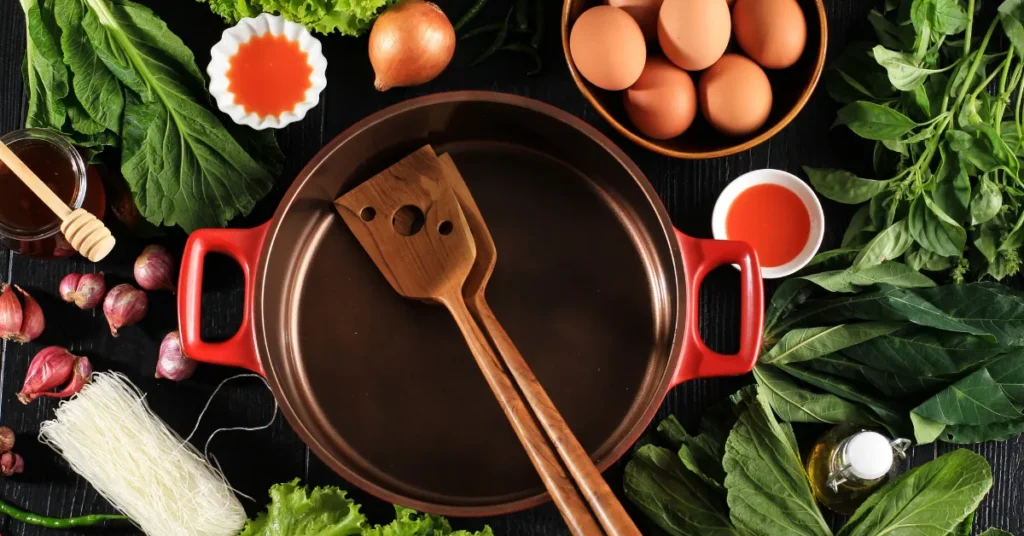
When equipping your Airbnb with the best cookware for Airbnb guests, choosing the right pots and pans can make all the difference.

Guests expect functional, durable, and good quality cookware sets that enhance their vacation rental experience.

At 10XBNB, we understand the unique needs of short-term rentals and have curated this Airbnb Tips post to help you select high-quality cookware that withstands regular use while keeping your guests happy.

From stainless steel cookware to cast iron skillets, let’s explore the top options for Airbnb homes.

Why Cookware Matters in Short-Term Rentals

Cookware is a cornerstone of any vacation rental kitchen. Guests often want to prepare their own meals, whether it’s a quick breakfast or a full dinner.

To enhance their stay and satisfaction, provide guests with well-equipped, high-quality cookware and essential kitchen amenities.

Providing the best pots and pans ensures they can cook without frustration, avoiding issues like food sticking or uneven heat distribution.

For Airbnb hosts, investing in durable cookware sets reduces replacement costs and enhances guest reviews—key factors in property management success.

At 10XBNB, we recommend focusing on pans that are oven safe, dishwasher safe, and non-stick for maximum convenience.

Key Features to Look for in Airbnb Cookware

Choosing cookware for short-term rentals requires balancing quality, durability, and guest-friendly features. Here’s what to prioritize:

  1. Durability: Cookware must withstand regular use by multiple guests.
  2. Non-Stick Surface: Non-stick cookware prevents food from sticking and simplifies cleanup.
  3. Dishwasher Safe: Guests appreciate pots and pans that are easy to clean in the dishwasher.
  4. Stain Resistant: Stain resistant materials, such as stainless steel and copper-bottom Revere ware, make cookware easier to maintain and keep looking new.
  5. Oven Safe: Pans that can go from stovetop to oven offer versatility.
  6. Even Heat Distribution: Stainless steel and cast iron ensure food cooks evenly without burning.

Explore more hosting essentials like this on our Airbnb Tips category page.

Stainless Steel Cookware: A Top Choice for Airbnb

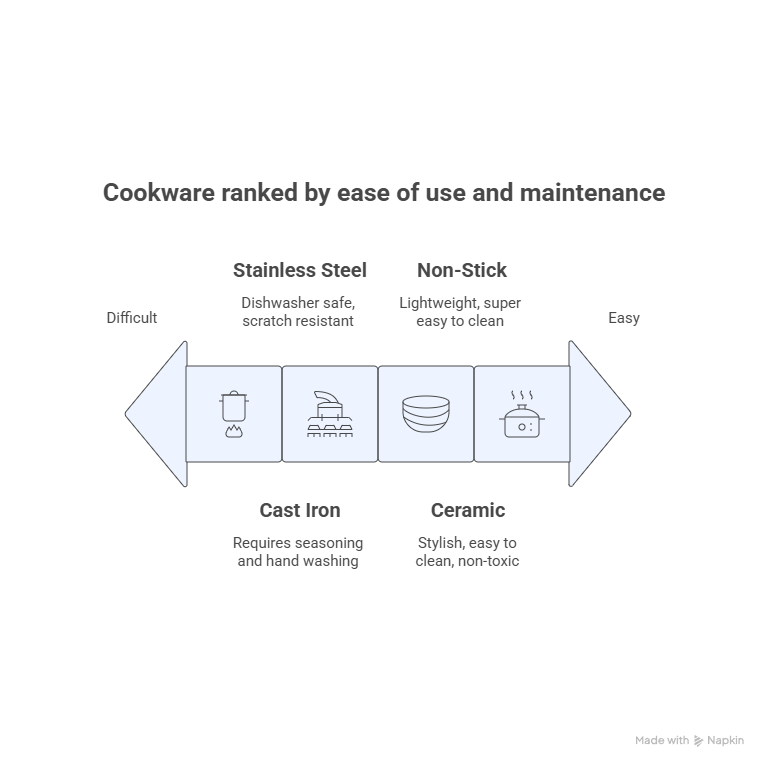
Stainless steel cookware is a favorite for Airbnb properties due to its durability and sleek look.

Stainless pans resist scratches, handle high heat, and are often dishwasher safe, making them ideal for short-term rentals.

A good stainless steel pan set features lids for steaming and simmering, ensuring guests can tackle various cooking needs.

At 10XBNB, we recommend stainless steel pots and pans for hosts seeking the best value. They’re non-toxic, long-lasting, and provide even heating—perfect for guests who enjoy cooking. Pair them with cooking utensils to complete the kitchen setup.


The Power of Cast Iron Cookware

Cast iron is a timeless option that shines in Airbnb kitchens. Known for its exceptional heat distribution, cast iron skillets and pans are oven safe and perfect for high-heat cooking like searing steaks or baking cornbread.

A well-seasoned cast iron pan develops a natural non-stick surface, reducing the need for non-stick coatings.

While cast iron requires proper care—like hand washing instead of dishwasher use—it’s incredibly durable.

At 10XBNB, we suggest including a cast iron skillet in your cookware sets for guests who love rustic cooking. Its versatility makes it one of the best pots for vacation rentals.


Non-Stick Cookware: Guest-Friendly and Easy to Clean

Non-stick cookware is a must-have for Airbnb homes. With a non-stick surface, guests can cook without worrying about food sticking or burning food. Non-stick cookware helps prevent guests from accidentally burning food, making cooking easier and cleanup simpler. High-quality non-stick frying pans with ceramic or hard-anodized coatings should be replaced every 1-2 years, especially if they are not high quality.

These pans are often lightweight, dishwasher safe, and ideal for quick dishes like eggs or pancakes. Look for nonstick coatings that are scratch-resistant and non-toxic for safety. A high-quality nonstick coating helps prevent food from sticking and makes it less likely to burn food.

A frying pan with a non-stick finish is a staple in any pan set. At 10XBNB, we advise hosts to choose cookware sets with multiple non-stick pans to accommodate various pots and cooking styles.

Ceramic Cookware: A Modern Alternative

Ceramic cookware offers a non-stick alternative to traditional metal pans. It’s oven safe, lightweight, and often features a non-toxic coating, appealing to health-conscious guests. Ceramic-coated cookware is easy to clean and maintain, making it a practical choice for vacation rentals.

While not as durable as stainless steel or cast iron, ceramic pots and pans provide easy cleanup and even heating.

For Airbnb hosts, ceramic cookware can be a stylish addition to your kitchen. Check out our guide on the best coffee maker for Airbnb to complement your cookware with other guest favorites.


Cookware Sets vs. Individual Pieces

Should you buy a full cookware set or individual pots and pans? For short-term rentals, cookware sets offer convenience and consistency. Providing a full matching cookware set makes it easier for guests to prepare any recipe they wish to cook. A typical set features a frying pan, saucepan, and stockpot—enough to meet most cooking needs. Look for sets with lids, oven-safe designs, and non-stick surfaces.

Alternatively, mixing and matching allows customization. A cast iron skillet paired with stainless steel pots can optimize cabinet space while providing guests with high-quality cookware. At 10XBNB, we lean toward sets for their cohesive look and best value.


Top Cookware Recommendations for Airbnb

Top Cookware Recommendations for Airbnb

Here are our top picks for the best cookware for Airbnb, curated by the 10XBNB team:

  1. Cuisinart Stainless Steel Set
  • Durable stainless steel
  • Dishwasher safe and oven safe
  • Even heat distribution
  • Its durability is a huge plus for Airbnb hosts.
  1. Lodge Cast Iron Skillet
  • Pre-seasoned cast iron
  • Natural non-stick surface
  • Perfect for high-heat cooking
  1. T-fal Non-Stick Cookware Set
  • Affordable non-stick pans
  • Dishwasher safe
  • Lightweight and easy to store
  1. GreenPan Ceramic Set
  • Non-toxic ceramic coating
  • Oven safe up to 400°F
  • Stylish design

Visit 10XBNB for more insights on outfitting your rental property.

Cast Iron vs. Stainless Steel vs. Non-Stick: Which Wins?

  • Cast Iron: Best for durability and heat retention. Ideal for guests who love cooking hearty meals.
  • Stainless Steel: Wins for versatility and easy maintenance. Great for dishwasher-safe needs.
  • Non-Stick: Tops the list for convenience and quick cleanup, perfect for casual cooks.

At 10XBNB, we recommend a mix—cast iron skillets for quality, stainless pots for durability, and non-stick pans for ease. This combination makes cooking easier and more enjoyable for your guests by offering the right tool for every recipe and skill level.


Budget-Friendly Options: Garage Sales and Estate Sales

  • Cast Iron: Best for durability and heat retention. Ideal for guests who love cooking hearty meals.
  • Stainless Steel: Wins for versatility and easy maintenance. Great for dishwasher-safe needs.
  • Non-Stick: Tops the list for convenience and quick cleanup, perfect for casual cooks.

At 10XBNB, we recommend a mix—cast iron skillets for quality, stainless pots for durability, and non-stick pans for ease.


Maintaining Your Airbnb Cookware

Proper care extends the life of your pots and pans. Encourage guests to avoid metal utensils on non-stick surfaces and hand wash cast iron pans. Stainless steel and ceramic cookware can handle the dishwasher, making cleanup a breeze. For stubborn burn marks or residues, using steel wool on stainless steel pans is effective and won’t damage the surface. Include a note in your welcome guide about caring for the cookware to keep it in top condition.

Pairing Cookware with Other Kitchen Essentials

Great cookware deserves great companions. Equip your kitchen with measuring cups, tools, cooking utensils, and a vacuum for Airbnb to keep the space spotless. A complete set of measuring cups and spoons is necessary for cooking and baking. A large colander is necessary for draining pasta, as well as a smaller strainer for sifting flour. A dutch oven or extra skillet can elevate the cooking experience, while quality lids ensure versatility.

A paring knife is a must-have tool for peeling and trimming fruits and vegetables, making it essential for precise prep work.

External Resource for Cookware Insights

For more on choosing durable cookware, check out this guide from Serious Eats on selecting pots and pans that last.


Final Thoughts on the Best Cookware for Airbnb

The right cookware transforms your Airbnb kitchen into a guest-friendly haven. Whether you opt for stainless steel, cast iron, or non-stick cookware, prioritize durability, ease of use, and quality.

At 10XBNB, we believe equipping your rental property with the best pots and pans is a smart investment in guest satisfaction and long-term success.

Explore more hosting tips at 10XBNB and elevate your short-term rental game today with the Airbnb Co-Host Market!vate your short-term rental game today!

The post Best Cookware for Airbnb: A Comprehensive Guide for Hosts appeared first on 10XBNB.


source https://learn.10xbnb.com/best-cookware-pots-airbnb/

Rental Arbitrage vs. Buying Property: Which Is Better in 2026?

Last Updated:  January 22, 2026 Author:  Shaun Ghavami, Co-Founder at 10XBNB Reading Time:  12 minutes Quick Answer: Rental Arbitrage vs....