Thursday, 22 January 2026

Rental Arbitrage vs. Buying Property: Which Is Better in 2026?

Last Updated: January 22, 2026

Author: Shaun Ghavami, Co-Founder at 10XBNB

Reading Time: 12 minutes

Quick Answer: Rental Arbitrage vs. Buying Property

Rental arbitrage is better if you:

  • Have limited capital ($5,000-$15,000 vs. $50,000+)
  • Want to test markets before buying
  • Need faster cash flow (30-60 days vs. months)
  • Prefer flexibility to exit at lease end
  • Want to scale quickly without large down payments

Buying property is better if you:

  • Have significant capital ($50,000+ for down payment)
  • Want to build equity and appreciation
  • Prefer long-term wealth building
  • Can handle property maintenance and ownership responsibilities
  • Want truly passive income (long-term rentals)

Best approach for many: Start with rental arbitrage (1-3 properties) to learn operations, test markets, and build capital, then transition to property ownership once you’ve proven the concept and accumulated capital.

This guide is part of our complete rental arbitrage guide. For related topics, see our startup costs breakdown and profitability analysis.

Introduction

Deciding between rental arbitrage and buying property is one of the most important choices you’ll make when entering the short-term rental business. Both strategies can generate significant income, but they require different capital, risk tolerance, and time commitments.

This comprehensive 2026 comparison draws from proprietary data from 1,247 successful 10XBNB students, real market analysis, and proven frameworks. You’ll learn exactly how these strategies compare across costs, risks, profitability, and time commitment—and which approach fits your situation.

Key takeaway: Rental arbitrage and property ownership aren’t mutually exclusive. Many successful operators start with rental arbitrage to learn operations and build capital, then transition to property ownership for long-term wealth building.

Cost Comparison: Startup, Ongoing, and Exit

Startup Costs

Rental Arbitrage:

  • Total: $5,000-$15,000 per property
  • First month’s rent: $1,500-$2,500
  • Security deposit: $1,500-$2,500
  • Furnishings: $4,500-$7,500
  • Operating capital: $2,000-$3,000

Property Ownership:

  • Total: $50,000-$150,000+ per property
  • Down payment (20%): $40,000-$120,000
  • Closing costs: $5,000-$15,000
  • Initial repairs/renovations: $5,000-$20,000
  • Furnishings (if STR): $4,500-$7,500

Winner: Rental arbitrage requires 90% less upfront capital, making it accessible to far more entrepreneurs.

Ongoing Costs

Rental Arbitrage:

  • Monthly rent: $1,500-$2,500
  • Utilities: $150-$300
  • Cleaning: $100-$150 per turnover
  • Platform fees: 3-15% of revenue
  • Maintenance: 5-10% of revenue
  • Insurance: $100-$200/month

Property Ownership:

  • Mortgage payment: $1,200-$2,500/month
  • Property taxes: $200-$600/month
  • Insurance: $150-$400/month
  • Maintenance: 1-2% of property value annually
  • Property management (if outsourced): 8-12% of revenue
  • HOA fees (if applicable): $100-$500/month

Winner: Property ownership has higher fixed costs (mortgage, taxes, insurance), while rental arbitrage has more variable costs tied to revenue.

Exit Costs

Rental Arbitrage:

  • Lease termination fee: $0-$2,000 (if breaking lease)
  • Furniture removal/storage: $500-$1,500
  • Total exit cost: $500-$3,500

Property Ownership:

  • Real estate agent commission: 5-6% of sale price ($10,000-$30,000+)
  • Closing costs: $5,000-$15,000
  • Capital gains tax (if applicable): Varies
  • Total exit cost: $15,000-$50,000+

Winner: Rental arbitrage offers much lower exit costs and greater flexibility to exit without significant financial penalty.

Financial Risk

Rental Arbitrage:

  • Capital at risk: $5,000-$15,000 per property
  • Risk factors:
    • Lease termination by landlord
    • Regulatory changes
    • Market saturation or demand decline
    • Unexpected expenses exceeding revenue
  • Risk mitigation: Diversify across multiple properties, maintain operating reserves, choose landlord-friendly markets

Property Ownership:

  • Capital at risk: $50,000-$150,000+ per property
  • Risk factors:
    • Property value decline
    • Market crash or recession
    • Major repairs (roof, HVAC, foundation)
    • Interest rate increases
    • Property tax increases
  • Risk mitigation: Diversify across markets, maintain emergency fund, choose appreciating markets

Winner: Rental arbitrage has lower financial risk due to smaller capital requirements, but property ownership offers equity building as a hedge against inflation.

Operational Risk

Rental Arbitrage:

  • Risk factors:
    • Landlord relationship issues
    • Lease non-renewal
    • Regulatory changes mid-lease
    • Guest damage exceeding security deposits
  • Mitigation: Professional operations, clear lease terms, landlord relationship management

Property Ownership:

  • Risk factors:
    • Property damage requiring major repairs
    • Tenant issues (if long-term rental)
    • Market value fluctuations
    • Natural disasters
  • Mitigation: Insurance coverage, preventive maintenance, property management systems

Winner: Rental arbitrage has higher operational risk due to landlord dependencies, while property ownership offers more control but requires handling all property responsibilities.

Rental Arbitrage:

  • Risk factors:
    • Cities banning or restricting STRs mid-lease
    • Lease violations if landlord discovers unauthorized subletting
    • Regulatory compliance requirements
  • Mitigation: Verify regulations before signing lease, secure written landlord approval, maintain compliance

Property Ownership:

  • Risk factors:
    • Zoning law changes
    • STR regulations in your market
    • Property tax increases
    • Eminent domain (rare)
  • Mitigation: Research regulations before buying, stay informed about local law changes

Winner: Both strategies face regulatory risks, but rental arbitrage has additional risk from landlord relationships and lease terms.

Time Commitment Comparison

Rental Arbitrage Time Requirements

Per property:

  • Initial setup: 40-60 hours (furnishing, listing, systems)
  • Ongoing: 10-20 hours weekly per property
    • Guest communication: 3-5 hours/week
    • Cleaning coordination: 2-3 hours/week
    • Maintenance coordination: 1-2 hours/week
    • Administrative tasks: 2-3 hours/week
    • Review management: 1-2 hours/week

With systems and team:

  • Reduces to 5-10 hours weekly per property
  • Virtual assistant handles communication
  • Cleaning team handles turnovers
  • Maintenance vendors handle repairs

Property Ownership Time Requirements

Long-term rental (traditional):

  • Initial setup: 20-40 hours (purchase, repairs, tenant placement)
  • Ongoing: 5-10 hours monthly per property
    • Tenant communication: 1-2 hours/month
    • Maintenance coordination: 2-4 hours/month
    • Administrative tasks: 1-2 hours/month

Short-term rental (if you own property):

  • Initial setup: 40-60 hours (furnishing, listing, systems)
  • Ongoing: 10-20 hours weekly per property (similar to rental arbitrage)

Winner: Long-term property ownership requires less time than rental arbitrage, but short-term rental property ownership requires similar time to rental arbitrage.

Profitability Comparison: ROI and Cash Flow

Cash Flow Comparison

Rental Arbitrage (Typical 2-Bedroom Unit):

  • Monthly revenue: $3,200-$4,500
  • Monthly expenses: $2,400-$3,200
    • Rent: $1,900
    • Utilities: $200
    • Cleaning: $400-$600
    • Platform fees: $200-$400
    • Maintenance: $200-$300
    • Insurance: $150
  • Monthly profit: $800-$1,300 per property
  • Annual profit: $9,600-$15,600 per property

Property Ownership (Long-Term Rental):

  • Monthly rent: $1,800-$2,200
  • Monthly expenses: $1,500-$1,900
    • Mortgage: $1,200-$1,800
    • Property taxes: $300
    • Insurance: $200
    • Maintenance: $200-$300
    • Vacancy reserve: $100-$200
  • Monthly cash flow: $200-$500 per property
  • Annual cash flow: $2,400-$6,000 per property

Property Ownership (Short-Term Rental):

  • Monthly revenue: $3,200-$4,500 (similar to rental arbitrage)
  • Monthly expenses: $2,000-$2,800
    • Mortgage: $1,200-$1,800
    • Property taxes: $300
    • Insurance: $200
    • Cleaning: $400-$600
    • Platform fees: $200-$400
    • Maintenance: $200-$300
  • Monthly profit: $1,000-$1,700 per property
  • Annual profit: $12,000-$20,400 per property

Winner: Rental arbitrage generates higher cash flow per dollar invested, but property ownership offers equity appreciation and tax benefits.

ROI Comparison

Rental Arbitrage:

  • Investment: $10,000 (average startup cost)
  • Annual profit: $12,000 (average)
  • Cash-on-cash return: 120% annually
  • No equity building: Profit only, no property appreciation

Property Ownership:

  • Investment: $80,000 (down payment + closing costs)
  • Annual cash flow: $4,000 (long-term rental average)
  • Cash-on-cash return: 5% annually
  • Equity building: $10,000-$20,000 annually (principal paydown + appreciation)
  • Total return: 15-25% annually (cash flow + equity)

Winner: Rental arbitrage offers higher cash-on-cash returns, but property ownership offers total returns including equity building and appreciation.

When to Choose Rental Arbitrage

Choose rental arbitrage if you:

  1. Have limited capital ($5,000-$15,000): Rental arbitrage requires 90% less upfront capital than property ownership.
  2. Want to test markets: Test different markets risk-free before committing to property purchases.
  3. Need faster cash flow: Generate income in 30-60 days versus months for property purchases.
  4. Prefer flexibility: Exit at lease end (typically 12 months) without significant financial penalty.
  5. Want to scale quickly: Scale to multiple properties without large down payments for each.
  6. Are learning operations: Learn short-term rental operations without property ownership responsibilities.
  7. Have landlord approval: Can secure written landlord approval for subletting.

According to 10XBNB’s 2026 Student Success Survey:

  • 68% of successful operators started as side hustlers with limited capital
  • 73% achieved profitability within 90 days
  • Average time to profitability: 67 days

When to Choose Property Ownership

Choose property ownership if you:

  1. Have significant capital ($50,000+): Can afford down payments and closing costs.
  2. Want to build equity: Benefit from property appreciation and principal paydown.
  3. Prefer long-term wealth building: Focus on 10-30 year wealth accumulation.
  4. Want tax benefits: Benefit from depreciation, mortgage interest deductions, and 1031 exchanges.
  5. Can handle property responsibilities: Manage maintenance, repairs, and property management.
  6. Want truly passive income (long-term rental): Long-term rentals require less active management than short-term rentals.
  7. Have proven market knowledge: Already understand the market and operations from rental arbitrage experience.

Property ownership advantages:

  • Equity building: $10,000-$20,000 annually per property
  • Appreciation: 3-5% annually in strong markets
  • Tax benefits: Depreciation, mortgage interest deductions
  • Long-term wealth: 10-30 year wealth accumulation

Hybrid Strategy: Start with Arbitrage, Buy Later

The best approach for many entrepreneurs: Start with rental arbitrage to learn operations, test markets, and build capital, then transition to property ownership once you’ve proven the concept.

Phase 1: Rental Arbitrage (Months 0-12)

Goals:

  • Learn short-term rental operations
  • Test 2-3 different markets
  • Build capital from profits
  • Establish systems and processes
  • Build team (cleaners, virtual assistants)

Expected results:

  • 1-3 properties generating $2,100-$6,300/month profit
  • $25,200-$75,600 annual profit
  • Market knowledge and operational expertise
  • Proven systems and processes

Phase 2: Property Ownership (Months 12-24+)

Goals:

  • Use rental arbitrage profits for down payments
  • Purchase 1-2 properties in proven markets
  • Build long-term wealth through equity
  • Maintain rental arbitrage properties for cash flow

Expected results:

  • 1-2 owned properties building equity
  • 1-3 rental arbitrage properties generating cash flow
  • Combined annual returns: $40,000-$100,000+
  • Long-term wealth building through equity

Real Student Example: Hybrid Strategy

Starting situation:

  • Full-time employee with $10,000 savings
  • Goal: Build wealth through real estate

Phase 1 (Months 0-12):

  • Started with 1 rental arbitrage property
  • Generated $2,400/month profit
  • Scaled to 3 properties by month 12
  • Total profit: $28,800 in year 1

Phase 2 (Months 12-24):

  • Used $25,000 from profits for down payment
  • Purchased first property ($125,000 purchase)
  • Maintained 3 rental arbitrage properties
  • Combined annual income: $45,000+ (cash flow + equity building)

Key success factors:

  • Started with rental arbitrage to learn and build capital
  • Tested market before buying property
  • Used arbitrage profits to fund property purchase
  • Maintained both strategies for cash flow and equity

Real Student Case Studies

Case Study 1: Side Hustler Choosing Rental Arbitrage

Profile:

  • Full-time employee
  • $8,000 savings
  • Wanted additional income stream
  • Limited time (10-15 hours weekly)

Decision: Chose rental arbitrage due to limited capital and time constraints.

Results:

  • Started with 1 property in Nashville, TN
  • Time to profitability: 67 days
  • Monthly profit: $2,100
  • Annual profit: $25,200
  • ROI: 315% on $8,000 investment

Why rental arbitrage worked:

  • Lower capital requirement ($8,000 vs. $50,000+)
  • Faster cash flow (67 days vs. months)
  • Flexible time commitment (10-15 hours weekly)

Case Study 2: Career Changer Choosing Property Ownership

Profile:

  • Wanted to leave corporate job
  • $75,000 savings
  • Goal: Replace $75,000 salary
  • Wanted long-term wealth building

Decision: Chose property ownership for equity building and long-term wealth.

Results:

  • Purchased 2 properties ($250,000 total)
  • Down payment: $50,000
  • Monthly cash flow: $800
  • Annual equity building: $18,000
  • Total annual return: $27,600 (11% on $250,000)

Why property ownership worked:

  • Had capital for down payments
  • Wanted equity building for long-term wealth
  • Preferred lower time commitment (long-term rentals)

Case Study 3: Real Estate Investor Using Hybrid Strategy

Profile:

  • Real estate investor
  • $20,000 available capital
  • Goal: Test markets and build capital before buying

Decision: Started with rental arbitrage, transitioned to property ownership.

Results:

  • Months 0-12: 2 rental arbitrage properties, $4,800/month profit
  • Months 12-24: Purchased 1 property using $30,000 from profits
  • Current: 1 owned property + 2 rental arbitrage properties
  • Combined annual income: $72,000+ (cash flow + equity)

Why hybrid strategy worked:

  • Tested markets risk-free with rental arbitrage
  • Built capital from arbitrage profits
  • Used proven market knowledge for property purchase
  • Maintained both strategies for cash flow and equity

Key Decision Factors Summary

Factor Rental Arbitrage Property Ownership
Startup Capital $5,000-$15,000 $50,000-$150,000+
Time to Cash Flow 30-60 days 3-6 months
Monthly Cash Flow $800-$1,300/property $200-$500 (long-term) or $1,000-$1,700 (STR)
ROI (Cash-on-Cash) 60-180% annually 5-12% (cash flow only)
Equity Building None $10,000-$20,000/year
Time Commitment 10-20 hours/week 5-10 hours/month (long-term) or 10-20 hours/week (STR)
Flexibility High (exit at lease end) Low (long-term commitment)
Risk Level Medium (landlord dependency) Medium-High (market, repairs)
Scalability High (low capital per property) Medium (high capital per property)

Frequently Asked Questions

Is rental arbitrage more profitable than buying property?

Rental arbitrage generates higher cash-on-cash returns (60-180% vs. 5-12% for property ownership), but property ownership offers total returns including equity building (15-25% annually). Rental arbitrage is better for cash flow, while property ownership is better for long-term wealth building.

Can I do both rental arbitrage and buy property?

Yes, many successful operators use a hybrid strategy: start with rental arbitrage to learn operations and build capital, then use profits to purchase properties. This approach combines the cash flow benefits of rental arbitrage with the equity building of property ownership.

Which requires less capital: rental arbitrage or buying property?

Rental arbitrage requires 90% less capital ($5,000-$15,000 vs. $50,000-$150,000+), making it accessible to far more entrepreneurs. However, property ownership offers equity building and appreciation that rental arbitrage doesn’t provide.

Is rental arbitrage riskier than buying property?

Both strategies have different risk profiles. Rental arbitrage has lower financial risk (less capital at risk) but higher operational risk (landlord dependency, lease terms). Property ownership has higher financial risk (more capital at risk) but more control over the asset.

Should I start with rental arbitrage or buy property?

Start with rental arbitrage if you have limited capital ($5,000-$15,000), want to test markets, or need faster cash flow. Buy property if you have significant capital ($50,000+), want to build equity, or prefer long-term wealth building. Many successful operators start with rental arbitrage and transition to property ownership.

Conclusion

Rental arbitrage and property ownership are both viable strategies for building income and wealth through real estate. The best choice depends on your capital, goals, risk tolerance, and time availability.

Choose rental arbitrage if:

  • You have limited capital ($5,000-$15,000)
  • You want to test markets before buying
  • You need faster cash flow
  • You prefer flexibility

Choose property ownership if:

  • You have significant capital ($50,000+)
  • You want to build equity and appreciation
  • You prefer long-term wealth building
  • You can handle property responsibilities

Best approach for many: Start with rental arbitrage (1-3 properties) to learn operations, test markets, and build capital, then transition to property ownership once you’ve proven the concept and accumulated capital.

Ready to start your rental arbitrage business? Join 10XBNB for proven systems, landlord pitch scripts, and mentorship from successful operators.

Last updated: January 22, 2026. This comparison is based on 2026 market data and proprietary research from 1,247 successful 10XBNB students.

The post Rental Arbitrage vs. Buying Property: Which Is Better in 2026? appeared first on 10XBNB.


source https://learn.10xbnb.com/rental-arbitrage-vs-buying-property/

Airbnb Co Hosting Course & Co Listing Training Airbnb

Becoming a co-host on Airbnb offers a unique opportunity to step into the world of short-term rental management without owning a property yourself. Whether you’re assisting property owners with their listings or looking to build an Airbnb business, co-hosting can be a lucrative and flexible venture.

Official Photograph of Shaun Ghavami
Co-Founder at  | Website

Shaun Ghavami is the Founder of 10XBNB, an online coaching program that teaches individuals how to build a profitable Airbnb business – and an Airbnb Superhost® who has generated over $5 million in booking fees and has over 1,000 5-star guest reviews on his Airbnb management company Hosticonic.com. Shaun has an official Finance Degree from UBC and completed certification with Training The Street.

This article explores what it takes to become a co-host, how much you can earn, and whether the role is worth your time. With insights from industry leaders like 10XBNB, we’ll break down the gold nuggets of an Airbnb co-host course and training PLUS equip you with the knowledge to thrive.

What Is an Airbnb Co-Host?

An Airbnb co-host is someone who partners with a primary host to manage an Airbnb property. The co-host takes on various hosting responsibilities, such as creating listings, handling guest communication, and ensuring a smooth check-out process. Co-hosting involves different aspects, including guest communication, property management, and ensuring local compliance. Unlike the primary host, who typically owns or leases the property, the co-host provides support and expertise, often for a percentage of the rental revenue. Co-hosts act on behalf of the primary host, managing listings and guest relations.

Co-hosts are invaluable to property owners who lack the time, experience, or local knowledge to manage their listings effectively. The ability of a co-host to communicate effectively and handle responsibilities is crucial for successful co-hosting. For instance, a busy professional or an out-of-town landlord might hire a co-host to oversee their Airbnb listing, ensuring guests enjoy exceptional service while maximizing occupancy rates. Co-hosts must complete identity verification before assisting with managing an Airbnb listing. They have specific permissions and limitations; for example, co-hosts cannot handle insurance claims or access the primary host’s transaction history.

Why a Consider Co-Hosting Business on Airbnb?

Co-hosting offers a low-barrier entry into the Airbnb platform. You don’t need to own a property or invest significant capital upfront, making it an attractive option for those eager to tap into the short-term rental market. With the right skills, a co-host can turn a side gig into a full-time business, managing multiple properties and delivering exceptional guest experiences. Co-hosts can expand their business by managing more listings or joining the co-host network, increasing their reach and capabilities. Hosting expertise and prior experience in the hospitality industry are valuable assets, enhancing credibility and success in co-hosting.

The rise of platforms like 10XBNB highlights the potential of co-hosting as a scalable model. Founded by experienced hosts Shaun Ghavami and Ari Rahmanian, 10XBNB teaches aspiring co-hosts how to break into the industry with no money down by leveraging their co-listing system. This approach has helped them manage over $100 million in premium real estate, proving that co-hosting can lead to significant success. The aim of leveraging technology and smart hosting is to create a seamless and enhanced guest experience through digital solutions.

To become an Airbnb co-host, you don’t need formal qualifications, but certain skills and resources will set you apart. Here’s what you’ll need to get started:

1. An Airbnb Account

You’ll need an Airbnb account to connect with hosts and manage listings. This is your gateway to the Airbnb platform, where you’ll create a co-host profile and showcase your services. For more information on how to transfer an Airbnb listing to someone else, see this comprehensive guide.

When setting up your Airbnb account to become a co-host, you will also need to verify your identity as part of the onboarding process.

2. Hosting Experience or Willingness to Learn

While prior hospitality experience isn’t mandatory, it’s a plus. Experience in the hospitality industry, such as working in hotels or restaurants, can be especially beneficial for co-hosts, as it provides relevant skills and credibility. Hosting expertise is crucial for effectively managing listings and ensuring a high-quality guest experience. If you’re new to hosting, platforms like 10XBNB offer training to bridge the gap, teaching you how to handle guest communication, optimize listings, and manage properties effectively. An Airbnb co-hosting course teaches skills for managing Airbnb properties, including platform navigation, guest communication, marketing, property maintenance, and legal compliance.

3. Local Knowledge

A strong understanding of the area where the property is located is essential. Co-hosts often provide guests with recommendations and ensure compliance with local regulations, making local expertise a key asset. Local co-hosts (local co) and neighbors are often ideal choices due to their proximity and ability to respond quickly to guest needs.

4. Time and Availability

Co-hosting requires flexibility to respond to guest inquiries, coordinate check-ins, and address potential issues. While you don’t need to be on-site 24/7, availability is critical to delivering a welcoming atmosphere.

5. A Co-Host Agreement

Before starting, establish a comprehensive co-hosting agreement with the primary host and make sure both parties sign it to formalize the partnership. This document outlines your responsibilities, compensation, and expectations, ensuring a smooth partnership. Consider hiring a lawyer to draft or review the agreement for legal protection, as this can help address specific needs and avoid future disputes. The agreement should include details about liability, safety responsibilities, a termination clause, and a dispute resolution process. For more on crafting this, check out this article on Airbnb co-host contracts.

Skills Every Airbnb Co-Host Should Master In An Airbnb Business

A co-host’s ability to communicate effectively, manage tasks, and adapt to challenges is crucial for success. Co-hosts are also responsible for ensuring safety, compliance with regulations, and guest satisfaction throughout the hosting process. Additionally, co-hosts can contribute to sustainable hosting practices, which not only appeal to environmentally conscious travelers but also support the well-being of the planet. To further enhance their skills, co-hosts can participate in workshops and courses focused on communication, technology, and financial management.

Success as a co-host hinges on a blend of practical and interpersonal skills. Here’s what to focus on:

Guest Communication (Guest Experience)

Prompt, friendly communication is the backbone of guest satisfaction. Co-hosts handle inquiries, booking confirmations, and follow-ups, ensuring guests feel supported throughout their stay. It’s also essential to make guests feel welcome by adding personal touches and using warm, inviting communication to create a comfortable atmosphere.

Property Management

From coordinating cleanings to troubleshooting maintenance issues, co-hosts keep the property in top shape. Effectively managing the space is crucial for creating a comfortable and inviting environment for guests. This aspect of property management ensures guests enjoy a seamless experience.

Dynamic Pricing (Maximize Revenue)

Setting competitive rates is crucial for maximizing revenue. Revenue management involves analyzing occupancy rates and adjusting pricing strategies to maximize profitability. Co-hosts often use dynamic pricing tools to adjust rates based on demand, seasonality, and local events, a skill 10XBNB emphasizes in its training.

Creating Listings

A standout listing with high-quality photos and detailed descriptions attracts more guests. Co-hosts craft compelling profiles that highlight the property’s unique features.

How to Start Your Co-Hosting Journey

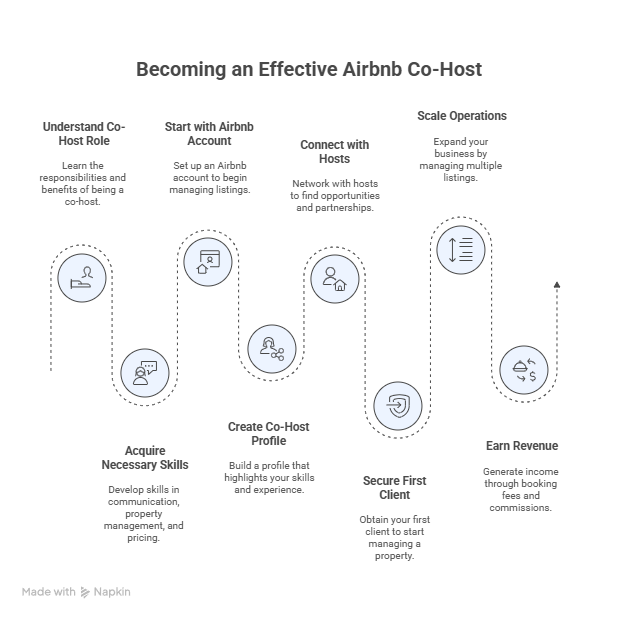
Ready to become a co-host? Follow this step-by-step guide:

  1. Learn the Basics: Study Airbnb’s co-host network and resources to understand the role. Platforms like 10XBNB can accelerate your learning with proven strategies.
  2. Build a Co-Host Profile: Highlight your skills and experience on Airbnb to attract potential clients.
  3. Network with Property Owners: Connect with hosts in your area or online who need assistance. Join Facebook groups dedicated to local Airbnb hosts to network, find co-hosting opportunities, and build professional connections. This post on marketing yourself as a co-host offers actionable tips.
  4. Secure Your First Client: Start with a family member, trusted friend, or local host to gain experience. You can invite any interested person—such as trusted friends, family members, or those interested in hospitality or short-term rental management—to join you as a co-host.
  5. Scale Your Services: As you grow, manage multiple listings and refine your approach.

For a deeper look at the process, see how to become anAirbnb co-host.

How Much Should an Airbnb Co-Host Make?

Earnings for an Airbnb co-host vary based on location, property type, and workload. Co-hosts are paid either a percentage of the rental revenue or an hourly rate for specific services provided. Typically, co-hosts charge 10-30% of the booking revenue, though some negotiate flat fees. Compensation can vary depending on the responsibilities taken on, and co-hosts can charge higher fees if they handle guest communication and cleaning. For a high-performing listing generating $5,000 monthly, a co-host earning 20% would make $1,000 per property.

10XBNB’s co-hosts, for example, have generated over $5 million in booking fees by managing premium properties, showcasing the earning potential for skilled co-hosts. To explore this further, read this breakdown of Airbnb co-host salaries.

Can You Make Money as an Airbnb Co-Host?

Yes, co-hosting can be profitable, especially if you manage multiple properties or specialize in high-demand markets. The key is to deliver value—whether through dynamic pricing, exceptional service, or boosting occupancy rates. Co-hosts who treat it as a business, like those trained by 10XBNB, can scale their income significantly.

However, earnings depend on effort and market conditions. A co-host managing a single listing in a low-traffic area might earn modestly, while one handling multiple listings in a tourist hotspot could see substantial returns.

Is an Airbnb Co-Host Worth It?

Whether co-hosting is worth it depends on your goals and circumstances. Here’s a quick breakdown:

Pros

  • Low Startup Costs: No need to own property or pay rent upfront.
  • Flexibility: Work remotely or locally, part-time or full-time.
  • Scalability: Grow from one listing to a portfolio of properties.

Cons

  • Time-Intensive: Managing guest experience and property issues can be demanding.
  • Income Variability: Earnings fluctuate with bookings and seasonality.
  • Dependence on Primary Host: Your success ties to their cooperation.

For many, the benefits outweigh the challenges, especially with proper training and a solid co-host agreement.

Leveraging 10XBNB for Co-Host Success

10XBNB stands out as a leader in co-host training, offering a blueprint for success. Their co-listing system teaches co-hosts how to partner with property owners, even with no prior experience. By focusing on dynamic pricing, guest experience, and property management, 10XBNB equips co-hosts to maximize revenue and build a thriving Airbnb business. Courses often connect you with a community of experienced hosts and fellow co-hosts for valuable networking.

Their approach is particularly valuable for beginners, providing step-by-step guidance and access to a community of experienced hosts. If you’re considering hiring supportthis article on Airbnb consultants complements their training insights..

Finding Co-Hosting Opportunities

Airbnb’s co-host network connects co-hosts with hosts in select countries, but you can also find clients independently. The Airbnb Co-Host Network connects you directly with property owners seeking management help, facilitating client base building without heavy marketing expenditure. Reach out to local property owners, join online forums, or offer your services to busy Airbnb hosts. Joining local Facebook groups is a great way to connect with property owners and other co-hosts in your area, helping you build trust and expand your professional network. Local co-hosts are especially valuable because they can promptly manage issues, update listings, and provide immediate guest support, ensuring a smooth experience for both hosts and guests. Building a reputation for reliability and results will attract more opportunities.

Managing Guest Expectations

A co-host’s role includes welcoming guests and ensuring their stay exceeds expectations. Efficiently managing reservations is crucial to guarantee a smooth guest experience, from coordinating check-ins to handling any changes in bookings. This might involve providing local recommendations or resolving issues quickly. Exceptional guest experiences lead to positive reviews, which boost the listing’s visibility and bookings.

The Role of a Co-Host Agreement

A well-drafted co-host agreement is non-negotiable. It is essential to define roles, permissions, and responsibilities clearly, such as who handles cleaning, guest communication, or has access to certain management features. Hosts and co-hosts must also decide how to share payouts and expenses related to the property, and set payment terms. This protects both the co-host and primary host, fostering a productive partnership. 10XBNB emphasizes this in their training, ensuring co-hosts start on the right foot.

Scaling Your Co-Hosting Services

Once you’ve mastered one property, consider expanding. Co-hosts can manage multiple properties remotely once they have mastered the basics. They can hire virtual assistants (learn more here), or even consult for other hosts. The key is to streamline processes and maintain quality across all properties.

Navigating Challenges as a Co-Host

Co-hosts may face issues like unresponsive primary hosts, guest complaints, or local regulations. Preparation and clear communication mitigate these risks. Training covers how to schedule professional cleaning and maintenance services between guest stays to ensure the property is spotless and well-stocked. A trusted co-hosting partner or mentor, like those found in 10XBNB’s community, can offer guidance when challenges arise.

Final Thoughts

Airbnb co-hosting is a rewarding path for those willing to learn and adapt. With the right skills, a solid co-host agreement, and resources like 10XBNB, you can turn hosting responsibilities into a profitable venture. Whether you’re assisting a family member or managing a portfolio of properties, success as a co-host starts with knowledge and action. Ready to begin? Your co-hosting journey awaits.

The post Airbnb Co Hosting Course & Co Listing Training Airbnb appeared first on 10XBNB.


source https://learn.10xbnb.com/airbnb-co-host-training/

Wednesday, 21 January 2026

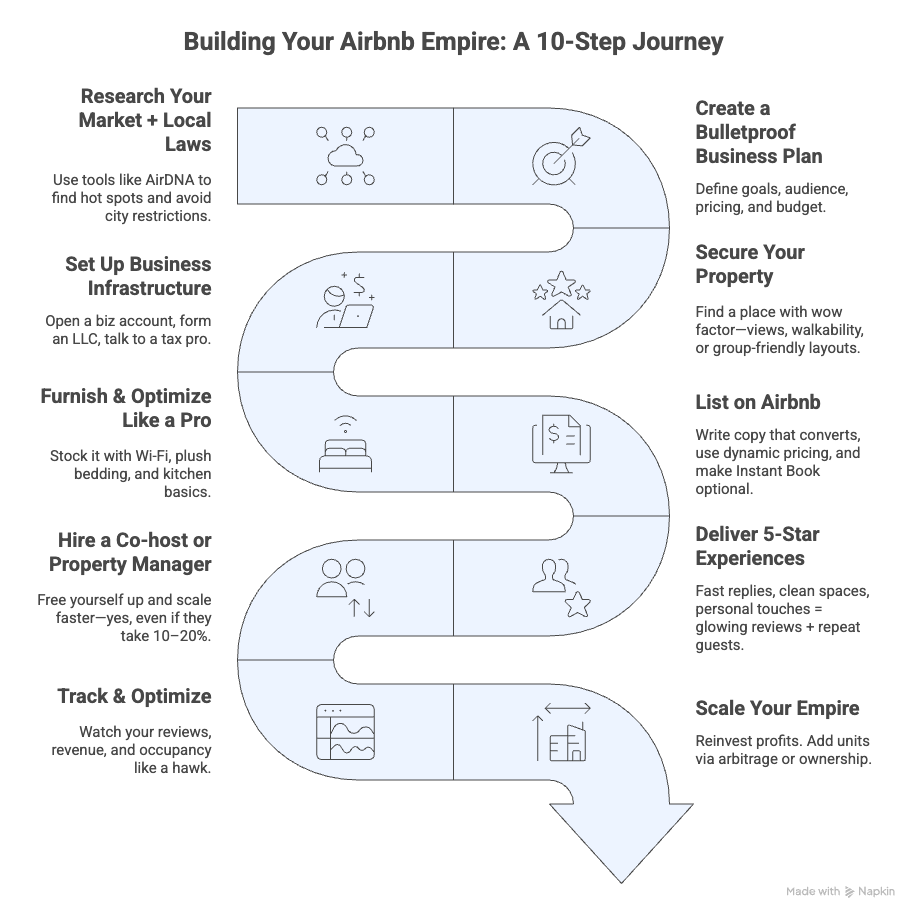
How to Start an Airbnb Business: 14 Steps to Build a Profitable Short-Term Rental (2026 Guide)

Starting an Airbnb business is one of the most accessible ways to build wealth through real estate in 2026. With travelers booking over 143 million nights in Q1 2025 alone according to Airbnb’s latest reports, demand for short-term rentals continues to grow—and smart entrepreneurs are capitalizing.

Official Photograph of Shaun Ghavami
Co-Founder at  | Website

Shaun Ghavami is the Founder of 10XBNB, an online coaching program that teaches individuals how to build a profitable Airbnb business – and an Airbnb Superhost® who has generated over $5 million in booking fees and has over 1,000 5-star guest reviews on his Airbnb management company Hosticonic.com. Shaun has an official Finance Degree from UBC and completed certification with Training The Street.

But here’s the truth: most new hosts fail. They jump in without understanding regulations, mispricing their properties, or lacking systems to deliver consistent guest experiences. This guide shows you exactly how to avoid those mistakes and build a profitable Airbnb business from the ground up.

Whether you want to rent out a spare room, invest in property, or scale a rental arbitrage portfolio, this step-by-step guide covers everything you need to know to succeed in 2026. For quick tips to implement immediately, check out our Airbnb tips guide.

Why Start an Airbnb Business in 2026?

The short-term rental market presents compelling opportunities despite increasing competition:

The Opportunity

  • Typical U.S. Airbnb hosts earned $14,000 in 2024
  • Top performers earn $36,678+ annually per property
  • Short-term rental hosts can earn 3.5x more than traditional landlords
  • Q1 2025 saw 143.1 million nights booked on Airbnb
  • Remote work continues driving demand for “workation” properties

The Reality Check

  • Competition has increased significantly in most markets
  • Regulations are tightening in major cities
  • Guest expectations have never been higher
  • Success requires systems, not just a spare room

Who This Business Model Works For

  • Real estate investors seeking higher yields
  • Entrepreneurs who want location-independent income
  • Property owners with underutilized space
  • People willing to learn hospitality and operations

Understanding the Airbnb Business Model

Before diving into steps, understand the fundamentals of how Airbnb hosting generates revenue.

Revenue Model

  • Guests pay nightly rate + cleaning fee + Airbnb service fee
  • Hosts receive nightly rate + cleaning fee minus Airbnb host fee (3%)
  • Hosts typically earn 85-97% of the total booking amount

Profit Formula

Monthly Profit = (Avg Nightly Rate × Nights Booked) + (Cleaning Fee × Turnovers) – Operating Expenses

Typical Operating Expenses

  • Mortgage/rent
  • Utilities (often higher with guests)
  • Cleaning costs
  • Supplies and restocking
  • Maintenance and repairs
  • Insurance
  • Property management software
  • Marketing and photography

The key to profitability is maximizing occupancy at optimal rates while controlling expenses through efficient systems.

Choosing Your Path: Three Business Models

There are three primary ways to start an Airbnb business, each with different capital requirements and risk profiles.

Model 1: Rental Arbitrage (Low Capital)

Rental arbitrage means leasing properties long-term and subletting them as short-term rentals on Airbnb. Read our complete Airbnb Arbitrage 101 guide for the full breakdown.

How it works:

  1. Find landlords willing to allow short-term rentals
  2. Sign a lease using a proper rental arbitrage contract
  3. Furnish the property
  4. List and manage on Airbnb
  5. Keep the difference between nightly revenue and monthly rent

Pros:

  • Low startup capital ($2,000-$10,000)
  • No property ownership required
  • Easy to test markets before buying
  • Scalable—add properties without mortgages

Cons:

  • Landlord relationship risk
  • No equity building
  • Lease obligations continue even with low bookings
  • Finding arbitrage-friendly landlords is challenging

Best for: Entrepreneurs who want to start quickly with limited capital and test the business model before investing in property.

Model 2: Property Ownership (High Capital, Long-Term Wealth)

The traditional approach: buy property specifically for short-term rental use.

How it works:

  1. Identify profitable markets with good STR fundamentals
  2. Purchase property (usually requires 20-25% down for investment properties)
  3. Furnish and list on Airbnb
  4. Build equity while generating rental income

Pros:

  • Build equity and long-term wealth
  • Full control over property
  • Potential appreciation gains
  • More financing options available
  • Tax benefits (depreciation, mortgage interest deduction)

Cons:

  • High capital requirements ($50,000-$200,000+ to start)
  • Market risk if property values decline
  • Illiquid investment—can’t exit quickly
  • Responsible for all maintenance and repairs

Best for: Investors with capital who want to build long-term wealth through real estate while generating rental income.

Model 3: Co-Hosting (Zero Property Required)

Co-hosting means managing other people’s Airbnb properties for a percentage of revenue. Learn how to become an Airbnb co-host with our complete guide.

How it works:

  1. Partner with property owners who lack time or expertise
  2. Handle guest communication, cleaning coordination, pricing, etc.
  3. Earn competitive co-host salaries (10-30% of booking revenue)
  4. Scale by adding more properties under management

Airbnb’s Co-Host Network (launched October 2024):

  • Connects 10,000+ co-hosts across 10 countries
  • Average co-host rating: 4.86 stars
  • 73% of network co-hosts are Superhosts
  • 84% manage Guest Favorite properties

Pros:

  • Zero capital required
  • No lease or mortgage obligations
  • Learn the business before investing your own money
  • Scalable through reputation and referrals

Cons:

  • Lower profit margins (10-30% vs. 100%)
  • Dependent on property owner relationships
  • Less control over property decisions
  • Must build reputation to attract clients

Best for: People who want to learn Airbnb hosting, build skills, and generate income before committing capital.

How Much Does It Cost to Start an Airbnb Business?

Startup costs vary dramatically based on your chosen model:

Rental Arbitrage Costs

Expense Category Low End High End
Security deposit $1,000 $4,000
First/last month rent $2,000 $6,000
Furniture package $2,000 $8,000
Linens and towels $300 $800
Kitchen essentials $300 $1,000
Decor and staging $300 $2,000
Professional photos $150 $500
Initial supplies $200 $500
TOTAL $6,250 $22,800

Property Purchase Costs

Expense Category Low End High End
Down payment (20-25%) $40,000 $150,000+
Closing costs (2-5%) $4,000 $15,000
Furniture package $5,000 $25,000
Renovations/updates $0 $30,000
Professional photos $200 $1,000
Initial supplies $500 $1,500
TOTAL $49,700 $222,500+

Co-Hosting Costs

Expense Category Low End High End
Property management software $0 $100/mo
Business cards/marketing $50 $300
Insurance (liability) $300 $1,000/yr
TOTAL $350 $1,400

Step 1: Research Your Market

Before committing any capital, analyze your target market thoroughly. Use our Airbnb arbitrage calculator to run the numbers, and explore the best states for Airbnb to find profitable markets.

Key Metrics to Research

Occupancy Rate:

The percentage of available nights that are booked. Healthy markets show 55-70% occupancy.

  • Below 50%: Oversaturated or weak demand
  • 50-60%: Competitive but viable
  • 60-70%: Strong market
  • Above 70%: High demand (but verify seasonality)

Average Daily Rate (ADR):

The average nightly price in your market for comparable properties.

Revenue Per Available Room (RevPAR):

ADR × Occupancy Rate = RevPAR. This shows true earning potential.

Seasonality:

Understand high vs. low season. Markets with extreme seasonality require careful cash flow planning.

Research Tools

  • AirDNA: Comprehensive STR market data
  • Mashvisor: Investment property analysis
  • AllTheRooms: Market analytics
  • Airbnb search: Manual competitive analysis
  • Check our Airbnb data and analytics guides

What to Look For

  • Growing traveler demand (not declining)
  • Reasonable competition (not oversaturated)
  • Regulatory environment that permits STRs
  • Economic stability in the area
  • Multiple demand drivers (tourism, business, events)

Step 2: Understand Local Regulations

Short-term rental regulations vary dramatically by location. What’s legal in one city may result in $10,000+ fines in another.

Research These Requirements

Zoning Laws:

  • Is your property in a zone that permits STRs?
  • Are there density limits (max STRs per building/area)?

Permit/License Requirements:

  • Is a short-term rental permit required?
  • What’s the application process and cost?
  • Are permits limited (lottery or cap)?

Operating Restrictions:

  • Maximum rental days per year (90-day limits are common)
  • Owner-occupancy requirements
  • Minimum stay requirements

Tax Requirements:

  • Local occupancy/hotel tax rates
  • Registration requirements
  • Collection and remittance processes

HOA/Building Rules:

  • Does your HOA or condo association permit STRs?
  • Are there specific HOA restrictions to follow?

Insurance Requirements:

How to Research

  1. Check your city’s official website for STR regulations
  2. Search “[Your City] short-term rental permit”
  3. Call your city’s planning/zoning department
  4. Consult a local real estate attorney for complex situations
  5. Join local host Facebook groups for practical insights

Step 3: Create a Business Plan

A business plan forces you to think through profitability before investing.

Essential Components

Executive Summary:

  • Business concept (arbitrage, ownership, co-hosting)
  • Target market and property type
  • Revenue and profit projections

Market Analysis:

  • Target market research (from Step 1)
  • Competitor analysis
  • Demand drivers and seasonality

Financial Projections:

Create a 12-month pro forma:

Monthly Revenue Projection:

  • Conservative: 45% occupancy
  • Moderate: 55% occupancy
  • Optimistic: 65% occupancy

Monthly Expenses:

  • Fixed: Rent/mortgage, insurance, subscriptions
  • Variable: Cleaning, supplies, utilities, repairs

Break-Even Analysis:

How many nights per month must you book to cover all expenses?

Risk Assessment:

  • What if occupancy drops 30%?
  • What if a major expense arises?
  • What’s your exit strategy?

Step 4: Secure Your Property

With research complete, it’s time to secure your property.

For Rental Arbitrage

Finding Arbitrage-Friendly Landlords:

Check out the best cities for Airbnb arbitrage, then:

  1. Search “furnished rental” and “corporate housing” listings
  2. Contact property management companies directly
  3. Look for landlords advertising “flexible terms”
  4. Network with other arbitrage hosts for referrals
  5. Be upfront about your intentions—deception backfires

Use our proven Airbnb arbitrage script when approaching landlords.

The Pitch to Landlords:

  • Emphasize property care (more attention than long-term tenants)
  • Offer higher rent (10-20% premium)
  • Provide references from other properties
  • Offer to add landlord as additional insured
  • Propose a trial period with inspection rights

Lease Considerations:

  • Get explicit written permission for short-term rentals
  • Clarify guest policies and any restrictions
  • Understand your maintenance responsibilities
  • Negotiate renewal terms upfront

For Property Purchase

Financing Options:

  • Conventional investment property loans (20-25% down)
  • DSCR loans (debt service coverage ratio—based on rental income, not personal income)
  • Portfolio loans (local banks, more flexibility)
  • Hard money loans (short-term, higher rates)
  • House hacking (owner-occupy while renting rooms)

Property Evaluation:

  • Run numbers on AirDNA before making offers
  • Verify STR regulations for specific addresses
  • Assess renovation needs and costs
  • Consider property management accessibility

Step 5: Set Up Your Business Infrastructure

Treat this as a real business from day one.

Legal Structure

Form an LLC for liability protection:

  • Separates personal assets from business
  • Provides tax flexibility
  • Creates professional credibility
  • Costs $50-$500 depending on state

Business Banking

  • Open a dedicated business checking account
  • Keep all income and expenses separate
  • Consider a business credit card for expense tracking

Insurance

Essential coverage:

  • Short-term rental insurance: Proper STR policy (not standard homeowners)
  • Liability coverage: $1M minimum recommended
  • Property protection: Covers damage to your furnishings

Providers: Proper Insurance, CBIZ, Safely, or add endorsements through traditional insurers.

Tax Setup

  • Get an EIN from the IRS (free)
  • Register for local business license
  • Set up occupancy tax collection (Airbnb handles this in most areas)
  • Track all expenses for deductions
  • Consider quarterly estimated tax payments

Step 6: Furnish and Prepare Your Property

Furnishing determines guest experience and photo quality—both critical to bookings. Use our complete furnishing Airbnb checklist to ensure nothing is missed.

Furnishing Budget by Property Size

  • Studio/1BR: $2,000-$5,000
  • 2BR: $4,000-$10,000
  • 3BR: $7,000-$15,000
  • 4BR+: $12,000-$25,000

Essential Furniture

  • Quality mattresses (don’t cheap out—guest sleep quality affects reviews)
  • Comfortable sofa/seating
  • Dining table with adequate seating
  • Nightstands with lamps
  • Dresser or closet storage
  • Desk/workspace area

Essential Amenities (2026 Standards)

  • Fast WiFi (100+ Mbps)
  • Smart TV with streaming apps
  • Coffee maker (Keurig or quality drip)
  • Full kitchen essentials
  • Quality linens (hotel-grade)
  • Towel sets (2 per guest)
  • Iron and ironing board
  • Hair dryer
  • Basic toiletries

High-Value Additions

  • Dedicated workspace
  • EV charger (increasingly important)
  • Hot tub or pool access
  • Outdoor seating area
  • Game room/entertainment
  • Pet-friendly accommodations

Sourcing Tips

  • IKEA for functional basics
  • Wayfair for good value furniture
  • Amazon for linens, kitchen items, consumables
  • Facebook Marketplace for secondhand finds
  • HomeGoods/TJ Maxx for decor

Step 7: Invest in Professional Photography

Professional photos are the single highest-ROI investment for your listing.

Why It Matters

  • Listings with pro photos get 40% more bookings
  • Better photos justify higher prices
  • First photo determines if guests click or scroll past

What to Capture

  • Hero shot (best angle of main living space)
  • Every room from multiple angles
  • Kitchen in detail
  • Bathroom (clean and staged)
  • Outdoor spaces
  • Unique features (fireplace, view, hot tub)
  • Neighborhood/location shots

Photography Tips

  • Shoot during golden hour for warm light
  • Stage every photo (made beds, set table, lit candles)
  • Remove personal items and clutter
  • Use wide-angle lens but avoid distortion
  • Update photos seasonally

Costs: $150-$500 for professional shoot

Step 8: Create Your Listing

Your listing converts browsers into bookers. Learn how to get more bookings on Airbnb and master Airbnb SEO to optimize every element.

Title Formula

[Property Type] + [Unique Feature] + [Location Hint]

Examples:

  • “Modern Downtown Loft | Rooftop Access | Walk to Everything”
  • “Cozy Cabin with Hot Tub | Mountain Views | Near Skiing”
  • “Family-Friendly Home | Pool & Game Room | Disney 10 Min”

Description Structure

Use our Airbnb description writing guide for detailed templates:

  1. Opening hook (2-3 sentences): Lead with your best feature and the experience guests will have.
  2. Space overview (1 paragraph): Describe the property layout and what makes it special.
  3. Amenities (bullet list): Comprehensive list of everything included.
  4. Location (1 paragraph): What’s nearby, how to get around, why guests choose this area.
  5. House rules summary (brief): High-level expectations.
  6. Call to action: Create urgency to book.

Pricing Strategy

For new listings:

  1. Price 15-20% below comparable listings initially
  2. Turn on Instant Book
  3. Accept all reasonable guests to build reviews
  4. Raise prices after reaching 5+ reviews

Ongoing pricing:

  • Use dynamic pricing tools (PriceLabs, Beyond Pricing, Wheelhouse)
  • Adjust for seasonality, events, and day of week
  • Set minimum stays strategically

Step 9: Deliver a 5-Star Guest Experience

Your first 10 reviews set your trajectory. Obsess over guest experience. Learn more about screening Airbnb guests to avoid problems.

Before Arrival

  • Send detailed check-in instructions 24-48 hours before
  • Confirm arrival time
  • Offer early check-in if possible
  • Provide parking and access details

Check-In

  • Ensure property is spotless
  • Set comfortable temperature
  • Leave welcome note or small gift in your guest welcome book
  • Provide clear WiFi instructions
  • Include emergency contacts

During Stay

  • Send a Day 2 check-in message
  • Respond to messages within 1 hour
  • Resolve issues immediately
  • Offer local recommendations

Check-Out

  • Send reminder with checkout time
  • Thank them for staying
  • Request a review within 24 hours

Step 10: Build Your Cleaning Systems

Cleanliness is the #1 factor in reviews. Build bulletproof systems using our complete Airbnb cleaning checklist.

Hiring Cleaners

  • Ask other hosts for referrals
  • Look for STR-experienced cleaners
  • Start with a trial period
  • Pay fairly ($100-200 per turnover)
  • Provide detailed cleaning checklist

Quality Control

  • Conduct surprise inspections
  • Review every cleanliness mention in reviews
  • Create a “Standard Property Appearance” guide

Coordination

Step 11: Automate Operations

As you grow, automation prevents burnout.

Guest Communication

  • Set up automated message sequences
  • Use saved replies for common questions
  • Consider AI-powered guest messaging tools

Smart Home Technology

  • Smart locks for remote access code management
  • Smart thermostats for energy savings
  • Noise monitors for party prevention
  • Smart plugs for lighting automation

Software Stack

  • Channel manager (if listing on multiple platforms)
  • Dynamic pricing tool
  • Property management software (for multiple properties)
  • Accounting software (QuickBooks, Wave)

Step 12: Monitor Performance Metrics

Track these KPIs monthly:

Revenue Metrics

  • Total revenue
  • Average daily rate (ADR)
  • Occupancy rate
  • Revenue per available night (RevPAN)

Guest Metrics

  • Overall review rating
  • Cleanliness rating specifically
  • Response rate and time
  • Repeat guest percentage

Profitability Metrics

  • Net operating income
  • Expense ratio (expenses / revenue)
  • Return on investment

Benchmarking

Compare your metrics to market averages using AirDNA or similar tools. Identify gaps and prioritize improvements.

Step 13: Scale Your Portfolio

Once your first property is profitable and systematized, consider scaling.

When to Add Properties

  • First property is consistently profitable (6+ months)
  • Systems are documented and repeatable
  • You have reliable team members (cleaners, maintenance)
  • You have capital or financing for expansion
  • You’ve identified profitable opportunities

Scaling Strategies

  • Add similar properties in proven markets
  • Expand to adjacent markets with similar dynamics
  • Move from arbitrage to ownership for long-term wealth
  • Partner with investors who have capital but lack expertise

Common Scaling Mistakes

  • Expanding before first property is systemized
  • Taking on too many properties at once
  • Underestimating management complexity
  • Neglecting existing properties while chasing new ones

Step 14: Stay Current with Platform Changes

Airbnb evolves constantly. Staying current protects your business.

2026 Key Changes

  • AI-powered search and personalization
  • Dynamic cancellation policies (customize by date)
  • 24-hour free cancellation is now universal
  • Co-Host Network expansion
  • Reserve Now Pay Later adding booking uncertainty

How to Stay Updated

  • Follow Airbnb’s official announcements
  • Join host communities (BiggerPockets, Facebook groups)
  • Subscribe to industry newsletters
  • Attend local host meetups

Is Starting an Airbnb Profitable in 2026?

Yes, but profitability requires:

Realistic Expectations

  • Most hosts earn $14,000-$36,000 annually
  • Top performers can earn $50,000-$100,000+ per property
  • First 3-6 months may be slower while building reviews
  • Seasonality affects cash flow

Success Factors

  • Right market selection
  • Regulatory compliance
  • Professional presentation
  • Competitive pricing
  • Excellent guest experience
  • Efficient operations

Warning Signs of Unprofitable Markets

  • Occupancy rates below 45%
  • Oversupply of listings vs. demand
  • Strict regulations limiting rental days
  • High operating costs eating margins

Pros and Cons of Starting an Airbnb Business

Pros

  • Higher income potential than long-term rentals
  • Flexibility in pricing and availability
  • Multiple business models (arbitrage, ownership, co-hosting)
  • Growing demand from travelers
  • Scalable with systems
  • Location-independent management

Cons

  • More active management than long-term rentals
  • Income variability and seasonality
  • Regulatory risk in many markets
  • Higher turnover costs
  • Guest issues and difficult situations
  • Platform dependency

Frequently Asked Questions

How much can I make with an Airbnb?

Earnings vary widely. The typical U.S. host earned $14,000 in 2024, while top performers earn $36,678+ annually. Your specific earnings depend on location, property type, pricing strategy, and occupancy rates.

Do I need a license to run an Airbnb?

Requirements vary by location. Many cities require short-term rental permits, business licenses, or both. Some have registration requirements. Always research your specific city’s regulations before starting.

Can I start an Airbnb without owning property?

Yes. Rental arbitrage lets you lease properties and sublet on Airbnb. Co-hosting lets you manage others’ properties for a revenue share. Both models require zero property ownership.

How long does it take to become profitable?

Most hosts achieve profitability within 3-6 months. The first few months often involve building reviews, optimizing listings, and learning operations. Expect slower bookings initially while establishing your reputation.

What’s the best way to start with limited capital?

Consider co-hosting first to learn the business with minimal investment. Then move to rental arbitrage with 1-2 properties. Use profits to fund eventual property ownership if that’s your goal.

Is Airbnb better than long-term renting?

Airbnb typically generates 2-3x higher gross revenue but requires more management and has higher operating costs. Net profitability depends on your market, property, and operational efficiency. Many investors do both.

What if my city restricts Airbnb rentals?

Options include: operating within legal limits (90-day caps, for example), pivoting to mid-term rentals (30+ days, often exempt from STR rules), or investing in nearby markets without restrictions.

Why 10XBNB Is Your Secret Weapon

At 10XBNB, we’ve helped thousands of entrepreneurs build profitable Airbnb businesses through our proven rental arbitrage system. Founded by Shaun Ghavami, we deliver real results.

What Makes Us Different

  • Founded by hosts who’ve earned $5M+ in booking fees
  • Step-by-step systems for every aspect of the business
  • Community of successful hosts sharing strategies
  • Ongoing updates as the industry evolves

Our Students’ Results

See real student success stories:

  • Launch their first property within 30-60 days
  • Build portfolios of 5-20+ properties
  • Create location-independent income streams
  • Scale from side hustle to full-time business

Final Thoughts: Your Airbnb Journey Starts Now

Starting an Airbnb business in 2026 offers genuine opportunity—but only for those who approach it strategically. The hosts who succeed treat this as a real business with proper planning, systems, and continuous improvement.

Your Next Steps

  1. Choose your business model (arbitrage, ownership, or co-hosting)
  2. Research your target market thoroughly
  3. Verify local regulations
  4. Create your business plan with realistic projections
  5. Take action—analysis paralysis kills more businesses than mistakes do

The short-term rental industry rewards action and execution. The knowledge is available. The opportunity exists. What you do next determines your results.

Ready to fast-track your success? Explore 10XBNB’s complete training program to learn the exact systems that have generated over $5 million in Airbnb bookings. For personalized guidance, check out our Airbnb coaching options.

The post How to Start an Airbnb Business: 14 Steps to Build a Profitable Short-Term Rental (2026 Guide) appeared first on 10XBNB.


source https://learn.10xbnb.com/how-to-start-an-airbnb-business/

Rental Arbitrage vs. Buying Property: Which Is Better in 2026?

Last Updated:  January 22, 2026 Author:  Shaun Ghavami, Co-Founder at 10XBNB Reading Time:  12 minutes Quick Answer: Rental Arbitrage vs....