The short-term rental landscape in 2026 looks different than it did even two years ago. Post-pandemic travel has fully recovered, with global travel spend hitting record levels and Airbnb hosting more than 8 million listings worldwide. But higher interest rates, tighter regulations in major cities, and increased competition from professional hosts have changed the calculus for real estate investors entering this space. The Airbnb market is evolving rapidly, with new trends shaping both current opportunities and the future outlook for hosts and investors.
If you’re wondering how to invest in Airbnb now, you have two primary paths: buying and operating short term rentals yourself, or pursuing financial investments like Airbnb stock (ABNB) or funding other hosts without touching property at all.
This guide walks you through both approaches with a practical, step-by-step roadmap. We’ll start with buying an airbnb investment property, then cover “no-property” options for those who want exposure without the mortgage.
Who this guide is for in 2026:
- First time investors exploring STRs as their entry into real estate
- Existing landlords considering converting a conventional rental property to short-term
- Hands-off investors seeking passive income from Airbnb’s growth without property ownership
- Anyone who wants to stay informed about the current short term rental market before committing capital
- Investors evaluating short term rental investment opportunities in the current market
Introduction to Airbnb Investing
Airbnb investing has rapidly emerged as a go-to strategy for real estate investors aiming to diversify their portfolios and tap into new streams of passive income. Unlike conventional rental properties, short term rentals offer the flexibility to adjust pricing and availability in real time, allowing investors to respond quickly to shifts in demand and maximize rental income. An airbnb investment property can generate higher returns by catering to travelers seeking unique, home-like accommodations, especially in popular tourist destinations and business hubs.
Success in airbnb investing hinges on more than just buying the right investment property. Real estate investors must stay on top of market trends, leverage dynamic pricing tools to optimize nightly rates, and maintain excellent guest communication to boost guest satisfaction and secure positive reviews. With the right approach, an airbnb investment can provide a reliable source of passive income while building long-term property value. As the short term rental industry continues to evolve, understanding these fundamentals is key to making the most of your real estate investment.
Airbnb vs Conventional Rental Property in 2026
The key differences between Airbnb and conventional rental properties center on profitability, rental terms, and operational aspects. With short term rentals like Airbnb, you benefit from nightly pricing and dynamic demand, rather than locking in a 12-month lease at a fixed rate. This means you’re constantly repricing your property based on seasonal demand, local events, and competition.
Here’s a concrete example using a 2-bedroom condo in Orlando, FL:
| Factor | Long-Term Rental | Airbnb |
|---|---|---|
| Monthly rent/revenue | ~$2,100 fixed | ~$3,960 (at $220 ADR, 60% occupancy) |
| Annual gross | $25,200 | $47,520 |
| Revenue certainty | High | Variable |
| Guest turnover | 1x per year | 50-100+ per year |
| Legal complexity | Low | Medium-High |
| Personal use | None | Flexible |
The numbers look compelling, but they come with caveats. In some cities—New York, Barcelona, and other heavily regulated markets—local regulations have made conventional rentals the safer play. In others—the Smoky Mountains, Gulf Coast beach towns, and Arizona desert retreats—STRs still materially outperform long term tenants in terms of total rental income.

Unique Expenses and Risks of Airbnb Investments
Higher revenue only matters if you control the costs that come with running an airbnb business. Before calculating your potential returns, understand these expense categories:
Extra costs specific to STRs:
- Cleaning and turnover: $100-$200+ per guest checkout, depending on property size
- Higher utilities: Guests use more water, electricity, and HVAC than long term tenants
- Consumables: Toiletries, coffee, paper products, and welcome amenities
- Platform fees: Airbnb typically charges hosts 3% per booking (guests pay an additional service fee)
- Dynamic pricing tools: Software like PriceLabs or Wheelhouse runs $20-50/month
- Short term rental insurance: Premiums run 20-40% higher than standard homeowners policies
For a deep dive into Airbnb operating expenses, see this comprehensive guide.
Regulatory risk is real. New York’s Local Law 18 effectively banned most short-term rentals under 30 days starting in 2023. European cities have tightened caps, and popular U.S. vacation towns have implemented permit moratoria. Before buying any airbnb property, verify that permits are actually being issued in your target market.
You’ll also need to factor in the time commitment of hosting—or the cost of a professional property manager, which typically runs 15-30% of gross revenue.
Airbnb Potential and Growth
The short term rental market has seen explosive growth, with Airbnb listings multiplying across cities, beach towns, and rural areas alike. This surge is driven by travelers’ desire for authentic, flexible lodging options that go beyond traditional hotels. For real estate investors, this shift presents a compelling opportunity: an airbnb investment can often outperform a conventional rental property in both occupancy rates and overall cash flow, especially when the right property is matched with the right target market.
One of the distinct advantages of short term rentals is the ability to adjust pricing and availability in response to seasonal demand and local events. This flexibility allows investors to capture higher rental income during peak travel periods and maintain steady bookings during off-peak seasons. By analyzing market data and comparable listings, investors can identify properties with strong airbnb potential and tailor their offerings to meet the needs of business travelers, vacationers, and remote workers. As the short term rental market continues to expand, those who stay informed and adapt to changing trends are well positioned to achieve robust returns and long-term growth in their real estate portfolios.
How to Invest in an Airbnb Property Now: Step-by-Step
This section is your core roadmap for 2025. These nine steps reflect today’s reality: higher borrowing costs, stricter local laws, and more competition from professional property managers who’ve optimized their operations.
Quick overview:
- Set a clear budget and cash reserve
- Investigate short term rental market trends
- Check local laws, zoning, and platform rules
- Choose your strategy: turnkey Airbnb vs. conversion
- Secure financing that works for STRs
- Find properties with strong airbnb potential
- Underwrite the deal: revenue, expenses, and ROI
- Make an offer and protect yourself with contingencies
- Set up, launch, and optimize your Airbnb
Expect 30-90 days from financing approval to closing, plus another 2-4 weeks for setup before your first guest arrives.
1. Set a Clear Budget and Cash Reserve
Define your total cash available before you start browsing listings. This includes:
- Down payment: 20-25% for investment properties (on a $400,000 place, that’s $80,000-$100,000)
- Closing costs: 2-5% of purchase price ($8,000-$20,000)
- Furnishing: $10,000-$40,000 depending on size and quality
- Reserves: 3-6 months of mortgage payment, insurance, and operating costs
In 2025, with interest rates often in the 6-8% range, undercapitalization is the fastest way an airbnb investment fails. Properties that looked profitable at 4% rates now require either larger down payments or higher occupancy rates to generate positive cash flow.
2. Investigate Short-Term Rental Market Trends
Thorough research separates profitable investments from money pits. Here’s what to investigate:
- Use market data tools: AirDNA, Mashvisor, and AllTheRooms provide occupancy rates, average daily rates (ADR), and revenue estimates by neighborhood
- Check local tourism bureau data: Visitor counts, hotel occupancy trends, and event calendars
- Analyze seasonality: A beach town might hit 85-90% occupancy in July but drop below 30% in January—your cash flow projections must account for this
- Study comparable listings: What are similar properties charging? What’s their booking calendar look like?
High-demand STR corridors for 2025: Florida panhandle, Smoky Mountains (Tennessee/North Carolina), Arizona desert retreats near Phoenix and Scottsdale, and secondary European cities with looser regulations than major capitals.

3. Check Local Laws, Zoning, and Platform Rules
This step must happen before you write any offers. Too many investors have purchased properties only to discover they can’t legally operate them as vacation rentals.
Research checklist:
- City website for STR ordinances and airbnb regulations
- County zoning office for permitted uses
- State lodging tax registration requirements
- HOA or condo bylaws (many explicitly prohibit short-term rentals)
Watch for these common restrictions:
- Primary residence only rules: NYC requires hosts to be present during stays
- Night caps: Some EU cities limit STRs to 90-120 nights per year
- Permit lotteries or moratoria: Popular vacation towns may not be issuing new permits at all
Before committing capital, verify whether new STR permits are being issued in Q1-Q2 2025 in your target market. A phone call to the local licensing office takes 10 minutes and could save you from a costly mistake.
4. Choose Your Strategy: Turnkey Airbnb vs. Conversion
You have two main property paths:
Buying an already-operating Airbnb:
- Immediate income from day one
- Existing reviews and booking history provide market data
- Often priced at a premium reflecting proven performance
- May include furnishings and future bookings in the sale
Converting a long-term rental or primary residence:
- Lower purchase price (no STR premium)
- Upside potential if you can optimize better than previous use
- Requires setup time, furnishing investment, and building reviews from zero
- Full flexibility on design and positioning
- Operating a short term rental property involves managing listings, guest communication, and handling turnovers between guests.
In tightly regulated markets, buying an existing licensed STR may be your only realistic path—new permits simply aren’t being issued. Align your choice with your skills: hands-on renovators might prefer conversion projects, while investors wanting immediate, more passive income should consider turnkey options.
5. Secure Financing That Works for Short-Term Rentals
Financing criteria for investment property differ significantly from your primary residence. Lenders view STR income differently, and you’ll need to understand your financing options.
Main 2025 loan types:
| Loan Type | Best For | Key Feature |
|---|---|---|
| Conventional investment mortgage | Strong W-2 income, first 1-4 properties | Lower rates, but counts against DTI |
| DSCR loan | Investors scaling beyond 4 properties | Qualifies based on property income, not personal income |
| HELOC/Cash-out refi | Tapping equity in existing properties | Can fund down payment without new loan qualification |
DSCR example: Lenders typically want the property’s projected income to cover 1.1-1.25x the monthly payment. If your mortgage, taxes, and insurance total $3,000/month, you’ll need to demonstrate projected net operating income of $3,300-$3,750/month. Strong DSCR ratios (1.5+) unlock better loan terms and lower reserve requirements.
Timeline: Expect 30-45 days from application to closing. Get pre-approved before serious property shopping.
6. Find Properties With Strong Airbnb Potential
Now you’re ready to search. Use the MLS, investor-focused platforms, and some portals that offer “Airbnb potential” filters based on estimated STR income.
Features that tend to outperform on Airbnb:
- 3+ bedrooms (families and groups drive revenue)
- Dedicated parking
- Outdoor spaces, hot tubs, or pools
- Dedicated workspaces (for remote workers and business travelers)
- Proximity to tourist destinations, convention centers, or natural attractions
- High speed internet already installed
- Proximity to public transportation, which increases accessibility and convenience for guests
Use active comparable listings in the same micro-location—same neighborhood, similar size and amenities—to gauge realistic nightly rates and occupancy rates. Don’t rely on citywide averages.
Consider walking or virtually touring the area at different times. Check for noise, parking congestion, and local sentiment toward short-term rentals. Unhappy neighbors can make your airbnb host experience miserable through complaints and negative pressure on local officials.
7. Underwrite the Deal: Revenue, Expenses, and ROI
At this stage, emotion must yield to numbers. Don’t fall in love with a property type until the math works.
Underwriting steps:
- Estimate conservative occupancy: Use 50-60% for year one, not the 75%+ you see in optimistic projections
- Set ADR based on comps: What are similar properties actually booking for, not listing for
- Calculate all monthly expenses: Mortgage payment, property taxes, insurance, utilities, cleaning, supplies, software, property management, repairs reserve
- Determine gross and net revenue: Subtract all ongoing costs from projected income
Key metrics:
- Cash-on-cash return: Annual pre-tax cash flow divided by total cash invested. Example: $12,000 annual cash flow on $100,000 invested = 12% cash-on-cash return
- Cap rate: Net operating income divided by property value. A $400,000 property generating $32,000 NOI = 8% cap rate
Stress test your numbers. What happens at 40% occupancy instead of 60%? What if ADR drops 15% due to new competition? If you can’t cover mortgage and fixed costs in a down scenario, the deal is too risky.
8. Make an Offer and Protect Yourself With Contingencies
Investors negotiate based on income potential, not just comparable listings of similar homes. Your offer should reflect realistic STR projections, not seller optimism.
Elements to negotiate:
- Purchase price based on actual or projected income
- Inclusion of furnishings (can save $15,000+ in startup costs)
- Takeover of existing future bookings
- Seller credits for needed repairs or upgrades
Critical contingencies:
- Standard inspection contingency
- Financing contingency
- Appraisal contingency
- STR licensing contingency: Include language allowing you to exit the contract if short-term rental permits are denied or take longer than a specified timeframe (e.g., 90 days)
Don’t skip the STR-specific contingency in regulated markets. You may need earnest money back if the city denies your permit application.
9. Set Up, Launch, and Optimize Your Airbnb
Buying the property is only half the job. Operations determine whether you make money or just own an expensive headache.
Key setup tasks:
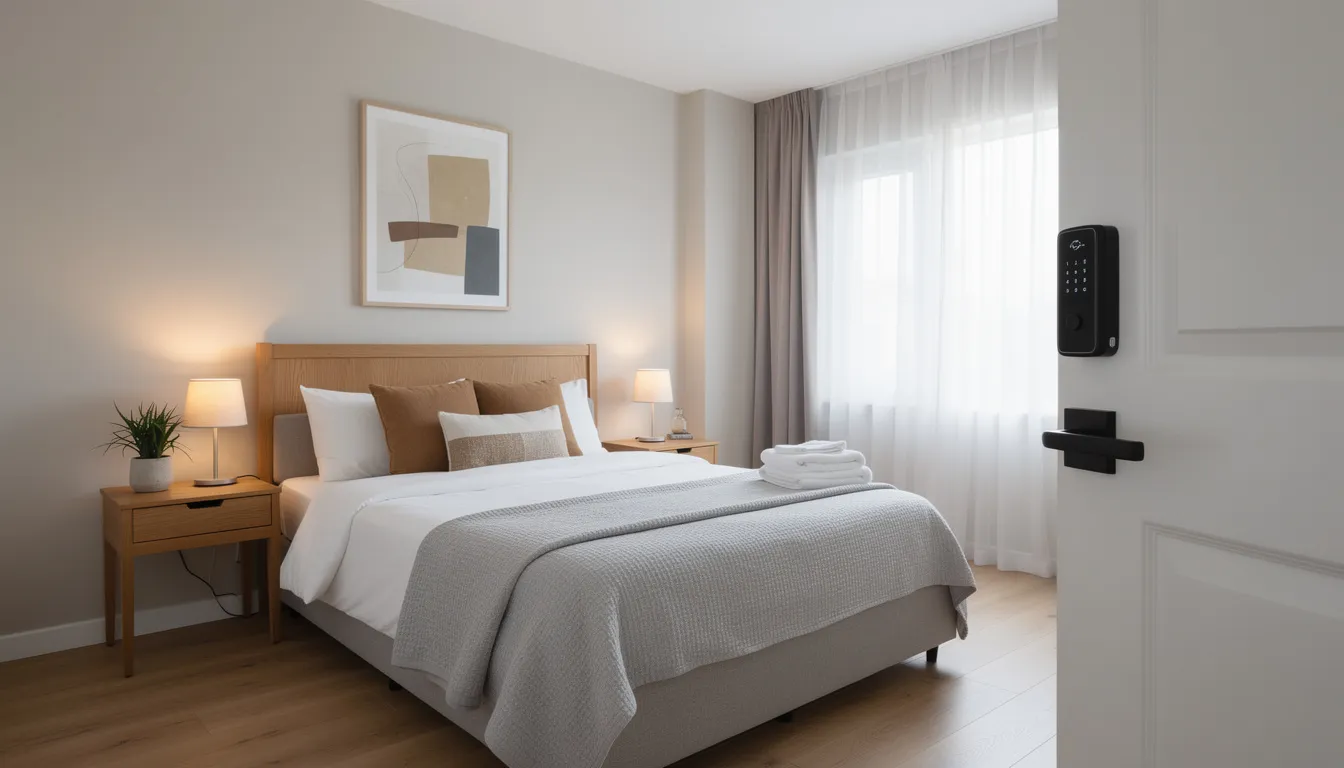
- Furnish for durability and visual appeal—think hotel quality, not garage sale
- Install smart locks for contactless guest check ins
- Add noise monitoring sensors (neighbors will thank you)
- Set up reliable high speed internet and dedicated workspaces
- Arrange professional photography (this is not optional)
Listing best practices:
- Write a keyword-rich title targeting your ideal guest
- Create an accurate, detailed description with clear house rules
- Configure dynamic pricing tools to adjust rates automatically
- Set minimum-stay requirements aligned with local regulations
- Respond to guest communication quickly to boost guest satisfaction
Plan for a 90-day optimization period. During this time, adjust pricing based on actual bookings, improve photos if initial ones underperform, and refine your messaging based on guest reviews and booking patterns. Most new airbnb listings don’t hit their stride until month three or four.
Calculating the True Cost of an Airbnb Investment Today
Let’s go deeper on costs. Many first time investors dramatically underestimate what it takes to run a profitable airbnb.
One-time startup costs:
| Category | Typical Range |
|---|---|
| Closing costs | 2-5% of purchase price |
| Renovation/repairs | $0-$30,000+ |
| Furnishing | $10,000-$40,000 |
| Professional photography | $200-$500 |
| Licensing/permits | $100-$2,000 |
| Initial supplies | $500-$1,500 |
Ongoing costs (monthly/annual):
| Category | Typical Range |
|---|---|
| Mortgage payment | Varies by price/rate |
| Property taxes | 1-2% of property value annually |
| Short term rental insurance | $2,000-$5,000/year |
| Utilities | $200-$500/month |
| Cleaning (per turnover) | $100-$200 |
| Supplies/consumables | $50-$150/month |
| Software (pricing, channel management) | $30-$100/month |
| Property management | 15-30% of gross if outsourced |
| Occupancy/lodging taxes | 8-15% of booking revenue |
| Repairs reserve | 5-10% of revenue |
Build a simple spreadsheet or use an STR calculator before committing capital. The difference between a good investment and a money loser often comes down to the upfront costs and ongoing costs you didn’t anticipate.
Planning for Taxes and Legal Structure
Tax treatment for short term rental income differs from both your primary residence and traditional long-term rental property. Understanding this before you buy saves headaches later.
U.S. considerations for 2025:
- Rental vs. business income: If average guest stays exceed 7 days and you don’t provide “substantial services,” income is typically treated as rental income. Shorter stays with hotel-like services may trigger self-employment tax.
- Depreciation: You can depreciate the structure (not land) over 27.5 years, reducing taxable income significantly.
- Deductions: Mortgage interest, property taxes, insurance, repairs, supplies, travel to the property, and professional fees are generally deductible.
Entity structures:
- Personal name: Simplest, but no liability protection
- LLC: Provides liability protection, but may complicate financing (some lenders won’t lend to LLCs, or charge higher rates)
- Consult a CPA and attorney: The right structure depends on your situation, state laws, and financing plans
Don’t forget occupancy and lodging tax registration. Most cities and counties now require STR hosts to collect and remit these taxes—failure to register can result in penalties.
Deciding How Hands-On You Want to Be
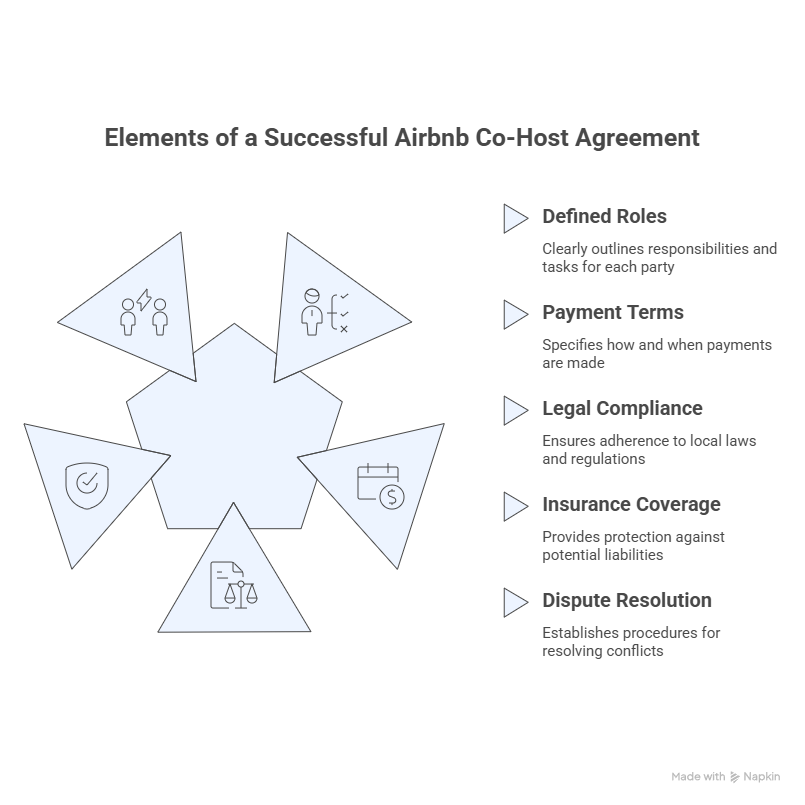
Your time commitment varies dramatically depending on whether you choose self management, co-hosting partnerships, or full-service property management.
Self-management:
- 5-15+ hours per week during busy seasons
- Handle all guest communication, pricing adjustments, cleaning coordination, and maintenance
- Maximum control and profit retention
- Can be overwhelming with multiple properties or during off peak seasons when issues pile up
Co-hosting:
- Partner with someone who handles day-to-day operations for 10-25% of revenue
- You retain ownership and major decisions
- Good middle ground for learning the business
Full-service property managers:
- Handle everything: pricing, communication, cleaning, maintenance coordination, restocking
- Typically charge 15-30% of gross revenue, sometimes plus setup fees
- Essential for out-of-state investors or those with multiple properties
Recommended hybrid approach for 2025: Self-manage for 6-12 months to learn the business deeply. Once you understand what drives bookings, where problems arise, and what guests actually want, you can outsource with confidence—and know whether your manager is doing a good job.
Avoiding Common First-Time Host Mistakes
Even with thorough research, execution mistakes can destroy your returns. Here are the missteps that hurt most new hosts:
- Overestimating occupancy: Planning for 80% when 55% is realistic for year one
- Underpricing cleaning and maintenance: These costs compound fast with high turnover
- Ignoring reviews: Negative reviews tank your search ranking and future bookings
- Using poor photos: Smartphone shots in bad lighting cost you thousands in lost bookings
- Neglecting neighbor relations: Complaints can lead to permit revocation
- Skipping reserves: One slow season or major repair can wipe out your cash flow
Practical fixes:
- Budget at 50-60% occupancy for year one, even in strong markets
- Schedule proactive maintenance before things break
- Respond to every review professionally, especially negative reviews
- Invest in professional photography from day one
- Set clear house rules with noise monitoring to prevent neighbor issues
- Keep 3-6 months of operating expenses in reserve ($5,000-$20,000+ depending on property size and mortgage payment)
How to Invest in Airbnb Without Buying Property
Not ready to buy real estate? You can still gain exposure to Airbnb’s growth and build experience for future investments through several alternative paths.
These approaches fall into two categories:
- Operational strategies: Co-hosting, rental arbitrage, and service businesses where you earn money through work
- Financial strategies: Airbnb stock, lending to hosts, and STR-focused investment funds where your capital does the work
Each option has different capital requirements, risk profiles, and time commitments. Pick one or two that match your current situation. Many investors in 2026 use these approaches to build experience and generate more money before purchasing their own property.

Co-Hosting and Property Management
Co-hosting means managing someone else’s listing for a share of revenue—typically 10-25% depending on responsibilities.
What you handle:
- Guest messaging and communication
- Calendar and booking management
- Dynamic pricing optimization
- Coordinating cleaners and maintenance
How to find first clients:
- Attend local host meetups and networking events
- Join Facebook groups for Airbnb hosts in your target market
- Reach out directly to poorly performing listings with specific improvement suggestions
- Partner with property managers who need help with overflow
This path builds real-world STR operational experience without mortgage risk. You learn what drives bookings, how to handle guest issues, and what separates profitable listings from struggling ones—all valuable knowledge before investing your own capital.
Rental Arbitrage
Rental arbitrage involves leasing a property long-term, then re-renting it on Airbnb arbitrage at higher nightly rates. The spread between your lease payment and STR revenue is your profit.
Critical requirements:
- Explicit landlord permission: Get written approval specifically allowing short-term subletting
- Full compliance with local laws: All STR permits, licenses, and taxes apply to you as the operator
- Tight underwriting: Your margins are thinner than ownership
Quick example:
- Monthly lease: $2,000
- Target Airbnb revenue: $3,500-$4,000 (at ~$150/night, 70% occupancy)
- Expenses (utilities, cleaning, supplies, platform fees): ~$1,000
- Net profit: $500-$1,000/month
The math can work, but requires discipline. In 2025, many landlords and large property management companies explicitly ban subleasing to STRs. Rural areas and smaller cities tend to offer better arbitrage opportunities than most markets in major metros.
Service Businesses for Airbnb Hosts
An entire ecosystem exists around short-term rentals, and you can build a profitable business serving hosts without owning property yourself.
High-demand services:
- Turnover cleaning: Reliable cleaners are gold; many hosts struggle to find them
- Professional photography: Most airbnb listings have terrible photos, creating obvious market opportunity
- Listing copywriting/SEO: Help hosts optimize titles, descriptions, and positioning
- Interior design and furnishing packages: Turn empty units into bookable properties
These services require little or no real estate capital and can scale to dozens of hosts in the same city. Partner with property managers and local host groups to build a steady client base. The right tools and reliable execution matter more than startup capital.
Financial Investments: Airbnb Stock and STR-Focused Vehicles
The simplest way to invest in Airbnb’s growth without any hosting responsibilities is buying Airbnb stock (ticker ABNB on Nasdaq since December 2020).
What you’re betting on:
- Global travel demand continuing to grow
- Airbnb expanding beyond accommodations into experiences and services
- The platform’s ability to navigate regulatory challenges worldwide
- Competitive dynamics versus hotels and other booking platforms
ABNB’s performance reflects broad market trends, not just one city’s STR rules. This provides diversification away from single-property risk, but also means you have no control over outcomes.
Other financial vehicles:
- REITs focused on hospitality or short-term rentals
- Private funds investing in STR portfolios
- Peer-to-peer lending platforms connecting capital with proven hosts
All securities carry risk. Consider your overall portfolio diversification and risk tolerance before allocating significant capital. A small position in Airbnb stock can complement—not replace—direct property investment for many real estate investors.
Should You Invest in Airbnb Now? Final Checklist for 2025
Before committing capital, answer these questions honestly:
Financial readiness:
- [ ] Do you have 20-25% down payment plus closing costs, furnishing, and 3-6 months reserves?
- [ ] Can you handle a down scenario (40% occupancy, rate drops) without financial stress?
- [ ] Have you stress-tested your underwriting with conservative assumptions?
Time and skills:
- [ ] Are you prepared to spend 5-15 hours weekly on management, or pay 15-30% for a manager?
- [ ] Do you have systems for guest communication, cleaning, and maintenance?
- [ ] Can you handle the learning curve of your first 90 days?
Market and regulatory understanding:
- [ ] Have you verified STR permits are available in your target market?
- [ ] Do you understand seasonal demand patterns and how they affect cash flow?
- [ ] Have you analyzed comparable listings and realistic ADR/occupancy for your property type?
Risk tolerance:
- [ ] Can you weather regulatory changes, market trends shifts, or economic downturns?
- [ ] Do you have backup plans if STR income drops significantly?
If you answered “no” to several of these, consider starting with lower-risk paths: co-hosting, service businesses, or a small airbnb stock position while you continue learning.
For those ready to proceed, here’s your sequence: budget → market research → legal checks → financing → property search → underwriting → offer → setup → optimization.
The opportunity in airbnb investing remains real in 2026. Record travel spending, continued preference for unique accommodations over hotels, and the growth of remote work have created genuine demand. But success now requires data, discipline, and adaptation to a more regulated, professionalized short term rental industry.
Whether you start with a single investment property, build experience through co-hosting, or simply allocate to ABNB in your portfolio, the key is matching your strategy to your capital, time, and risk tolerance. Start with one approach, execute it well using the right tools, and expand from there.
The post How to Invest in Airbnb Now (2026 Guide) appeared first on 10XBNB.
source https://learn.10xbnb.com/how-to-invest-in-airbnb-now-2026-guide/