Wednesday, 27 May 2026

Hospitable For Airbnb Hosts: Honest Review Of The Guest-Comm PMS

Hospitable, the platform formerly known as Smartbnb and Your Porter, has become the default property management platform for operators between one and fifty listings. The reason most operators land on it is the guest communication automation. The AI auto-reply, message templates, and review automation handle the parts of the business that eat the most time.

An honest review acknowledges both sides. Hospitable wins on intuitive interface, strong AI message handling, and pricing that scales linearly with listing count. It loses on channel manager depth (Hostaway has more direct integrations) and financial reporting (Stessa or Hostfully Books handle that side better). The full Hospitable review for Airbnb operators walks through the AI auto-reply system in detail, which is what makes Hospitable different from Hostaway or Guesty.

Pair the platform with the rest of the operator stack. The Airbnb automation tools covers what a complete automation system looks like for an Airbnb business at different portfolio sizes.

10XBNB students who run Hospitable use it as the guest-comm layer inside a larger operator system. Live coaching teaches the message-trigger logic, the active community shares the templates that actually convert reviews into bookings, and mentorship from operators with about a thousand collective doors shapes the automation around real patterns rather than guesses. The tool handles the messaging. The system handles the business.

More operator deep dives at the 10XBNB blog.

Picking Between Pricelabs, Wheelhouse, And Beyond Pricing In 2026

If you are about to write the check for a dynamic pricing tool, the three names you keep hearing are Pricelabs, Wheelhouse, and Beyond. They are not interchangeable. The right pick depends on portfolio size, market volatility, and how much rule-writing you want to do.

Quick frame. Pricelabs is the data-deep default for most operators between two and fifty listings, with the deepest comp sets and the finest rule engine. Wheelhouse leans on machine learning and works well in volatile markets at mid-portfolio scale, though the percentage fee model bites at higher revenue. Beyond is the simplest tool for one to three listings in stable markets, and the simplest one to outgrow.

Our full Pricelabs vs Wheelhouse vs Beyond Pricing comparison runs the side-by-side table on features, pricing models, integrations, learning curve, and the operator profiles each tool actually fits. We refuse to crown a single winner because the answer is a matrix.

One thing all three tools share is that they price your existing nights. They do not help you pick the right market, write the right landlord script, or build the operations that keep one operator running multiple units. Run the numbers on a deal yourself in the Airbnb arbitrage calculator and you will see what the tool can and cannot do for you.

The 10XBNB program is positioned as the layer above the tool. Live coaching, the active student community, and mentorship from operators with collectively about a thousand doors. The tool is necessary. The operator system is what produces the lift.

More tool reviews and operator deep dives at the 10XBNB blog.
Beyond Pricing In 2026: Who Still Benefits From The Category's Original Tool

Beyond Pricing, now just Beyond, was the first dynamic pricing tool that mattered in vacation rentals. From 2013 to 2020 it was the default pick. The category has moved past it in some ways, but Beyond still serves a specific operator profile well.

Who that profile is, exactly, is what most reviews skip. Beyond is the right pick for hands-off operators with one to three listings in established markets, where set-and-forget is the goal and the percentage fee on smaller revenue stays manageable. Once your monthly revenue per listing crosses about two thousand dollars, the percentage model starts to cost more than flat-fee competitors charge for the year.

Our full Beyond Pricing review runs that math and lays out where Beyond still wins, where it has lost ground to Pricelabs, and the channel-sync features that did stay competitive (Relay covers Airbnb, Vrbo, and Booking.com). For the broader operator stack, the Airbnb tools roundup covers the full set of tools 10XBNB students typically run.

The honest message we give students is simple. Pick the tool that fits your scale. Beyond is fine for the first one or two units. The day you hit five units the math points elsewhere, and the live coaching, active student community, and mentorship from operators who have made the same migration is what makes the switch smooth.

More operator deep dives at the 10XBNB blog.

Wheelhouse For Airbnb Hosts: Where The ML Pricing Actually Wins

Wheelhouse positions itself on machine learning sophistication. The question is whether the ML actually wins for your portfolio, because the pricing model charges a percentage of booking revenue at the Pro tier, and that math gets expensive at scale.

Here is the real picture. Wheelhouse shines for operators with five to fifteen mid priced listings in markets with real volatility. The ML reads pickup pace and event-driven demand faster than rule-based engines, and the dashboard helps you spot pricing mistakes in days, not weeks. For a single listing or a stable market, simpler tools usually do the job for less money.

The full operator-honest Wheelhouse review runs pricing math at five revenue tiers and exposes where Wheelhouse Pro Flex quietly costs four to six times Pro Flat at the wrong portfolio. That is the kind of detail most reviews skip, because the math embarrasses the tool at certain price points.

If you want to see Wheelhouse next to its two main competitors, the Pricelabs vs Wheelhouse vs Beyond Pricing covers all three with a portfolio-aware verdict chart instead of a forced winner.

10XBNB students who use Wheelhouse usually pair it with the rules we teach inside the program. The tool sets the daily number. The operator decides the base, the floor, the weekday-vs-weekend split, and the orphan-day rule. Live coaching, the active community, and mentorship from operators running these systems at scale make the configuration actually work.

Pick the pricing tool that matches your portfolio size. More operator reviews at the 10XBNB blog.

What Most Pricelabs Reviews Miss For Airbnb Operators

Pricelabs sits in the operator stack of most short-term rental businesses running more than two units. The tool is widely used and widely reviewed, but the reviews fall into two patterns. Either they are affiliate pieces that gloss over real friction, or they are venting threads that skip the actual mechanics.

Here is what an honest read looks like. Pricelabs has the deepest data of the three major dynamic pricing engines. It tracks comp sets and pickup pace across millions of listings, and the rule engine gives you finer control than Wheelhouse or Beyond. The flip side is a learning curve. New operators often misconfigure base prices and minimum stays on day one, then blame the tool for low occupancy.

Read the full honest Pricelabs review for the algorithm walkthrough, the pricing tier math, and the configurations that actually move revenue. We also lay out where Pricelabs falls short, including the occasional algorithmic dip during shoulder seasons and the dated bits of the interface.

If you are still deciding between platforms, the dynamic pricing tools comparison walks through the head to head with Wheelhouse and Beyond. The right answer depends on portfolio size, market type, and how much rule-writing you want to do.

The piece our 10XBNB students always come back to is the operator system around the tool. Pricelabs picks the right number on a given night. It does not pick the right base price for the season, set your minimum stay for the right traveler, or handle the landlord conversation that gets you the unit in the first place. That is what live coaching, the active student community, and mentorship from operators with collectively about a thousand doors actually provides.

Pick the tool that fits your portfolio. Then layer the system that turns the tool into real revenue. More operator deep dives at the 10XBNB blog.

Wednesday, 20 May 2026

Airbnb Arbitrage For Beginners: The First 90 Days

If you are new to Airbnb arbitrage, the first 90 days decide more than anything that comes later. Here is what that window looks like when it goes well.

Weeks one and two are research, not action. You pick a market by reading three numbers: average daily rate, occupancy, and the spread between busy and slow months. You confirm the short-term rental rules for that city, because local law, not state law, decides whether you can operate. Skipping this step is the mistake that ends beginner runs early.

Weeks three and four are the lease. You approach landlords with a clear pitch: reliable monthly rent, professional care of the unit, and a written short-term rental addendum. Expect to hear no several times before you hear yes. The contract is your protection, so it gets signed in writing with the platforms and the entity named. New operators often underestimate the cash needed at this stage, so the rental arbitrage startup costs guide is worth reading before you commit.

Weeks five and six are setup. Furniture, basic decor, and the items guests actually rate: a good mattress, a comfortable sofa, and a kitchen that works. You book a professional photographer, because listing photos drive booking speed more than any clever description.

Weeks seven and eight are launch. The listing goes live with a strong title, a clear description, and a dynamic pricing tool set to adjust rates daily. First-month occupancy usually runs lower than the spreadsheet promised, somewhere near 30 to 40 percent, so your reserve has to cover that slow start. This is normal. It is not a sign the unit failed.

Weeks nine through twelve are tuning. You watch which nights book and which sit, adjust the minimum stay, refine the photos that underperform, and tighten your cleaner schedule. By day 90 a well-run unit is settling into a steady booking rhythm.

The honest part: the first unit is the hardest, because every step is new. A clear plan removes most of the fear. A walkthrough of the whole beginner path is in this guide to Airbnb arbitrage for beginners, written for people taking their first step.

This is also where many beginners decide they want guidance rather than a solo run. That is a reasonable call. 10XBNB built its program for first-time operators who want a proven plan and people to ask along the way.

More starter guides are at the 10XBNB blog. Momentum beats perfection. Get the research right, take the first lease, and learn from the real unit.

How To Compare Airbnb Arbitrage Courses Before You Enroll

There are more Airbnb arbitrage courses than ever, and they are not equal. Before you enroll in any of them, it helps to have a clear set of filters. Here is the checklist I use.

First, check whether the teacher is an active operator. The market changed in the last two years. Platform fees, regulations, and pricing tools all moved. A course built by someone who left the business in 2022 teaches a model that no longer matches reality. An active operator updates the material because they live in it.

Second, look at the curriculum depth. A real program covers market selection, landlord negotiation, lease structure, listing optimization, pricing, and the operating systems for guest management. A course that spends all its time on the exciting parts and skips the lease and the systems is not teaching the whole business. If you are still deciding whether the model fits you, start with what Airbnb arbitrage actually is.

Third, check the support format. A pure video library leaves you alone the moment a real problem appears. Programs with live coaching and an active community help you when your specific landlord or your specific listing needs an answer. That difference shows up in how fast you reach a profitable unit.

Fourth, look for an honest refund policy and real student outcomes. A program confident in its material states its terms clearly and points to operators it has actually helped.

Fifth, judge the content currency. Ask when the modules were last updated. The 2026 version of arbitrage is not the 2023 version, and the material should show it.

We applied exactly these filters in our roundup of the best Airbnb arbitrage courses compared, scoring each option on curriculum, format, support, and who it actually suits. 10XBNB ranks at the top of that list, and the roundup is honest about why, with fair treatment of the alternatives.

One caution worth stating. The flashiest marketing does not equal the best teaching, and a low sticker does not equal a bargain. The right program is the one whose teaching depth and support format match how you learn and how fast you want to move.

The honest way to judge any course is against your first deal. A program that gets you to a profitable lease sooner, and helps you avoid one costly mistake, has earned its place. Match the format to your situation and decide from there.

More operator guides are at the 10XBNB blog. Compare on substance, enroll with clear eyes, and then do the work.

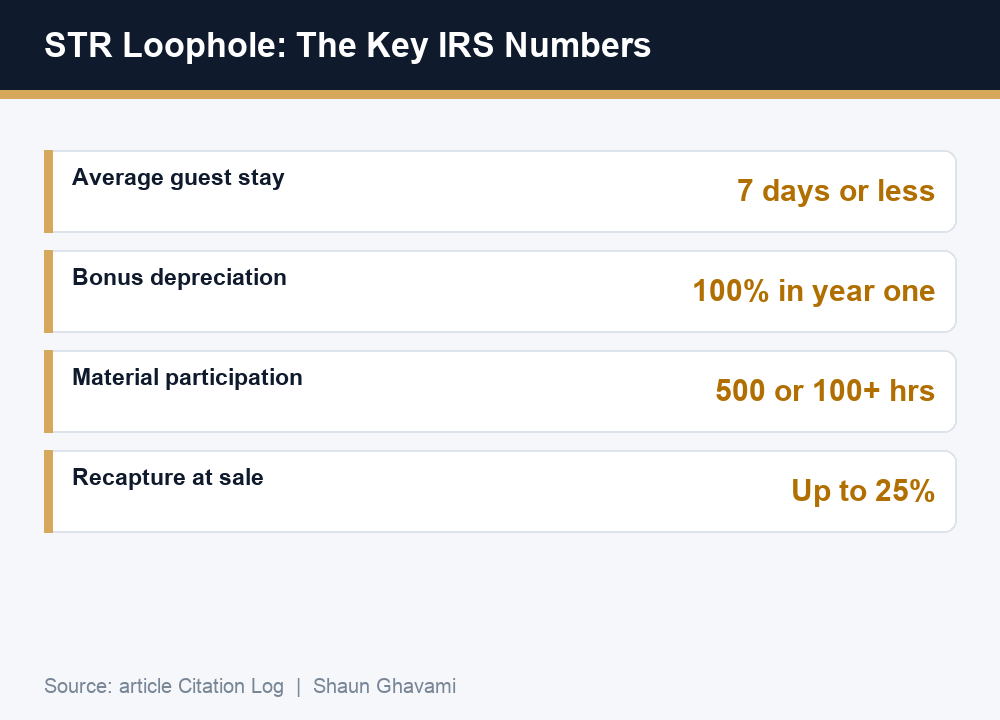
The Short-Term Rental Tax Loophole: How Hosts Offset W-2 Income (2026)

The short-term rental tax loophole lets a property owner use rental losses to offset W-2 wages in the same year, without being a full-time r...